4 Omni-Reference techniques for styling without losing face or detail
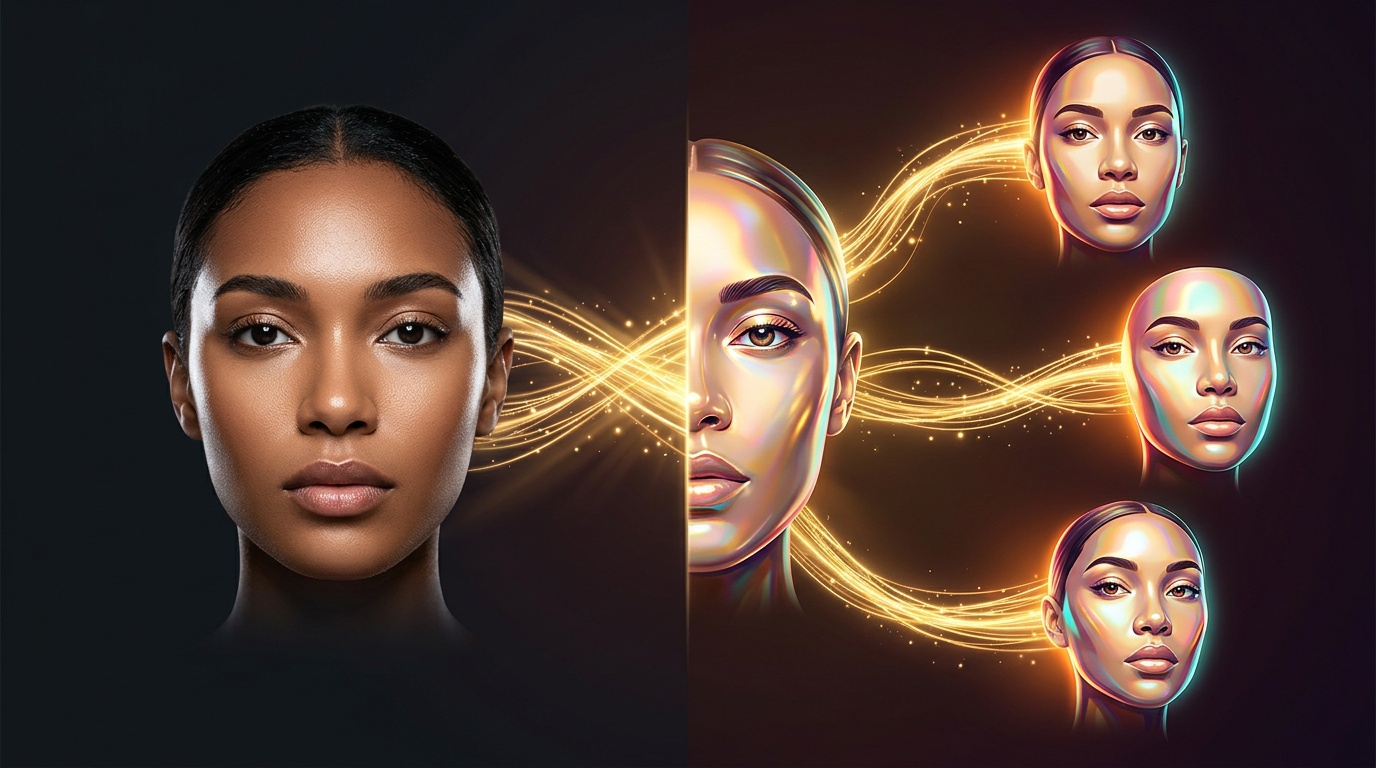
On July 24, Midjourney quietly switched all users to the V8.2 model — without loud announcements, but with a noticeable effect: images became bolder and higher in contrast, and old Personalization and Omni-Reference combinations started producing slightly different results. For those involved in styling — turning photos into illustrations, changing a character's visual style for a series of posts, or adapting a client's face to a brand's signature art style — this is a reason to reassemble your workflow rather than just noting that "the pictures look different."
What changed on July 24
At the same time, a specific detail, important precisely for styling:
Technique: how to style without losing likeness
The task of styling is almost always tied to a conflict: the more the style changes, the easier it is for the neural network to lose recognizable features of a face, object, or brand character. A working four-step combination reduces this risk.
- One clean reference.
- Weight adjustment for the task. For styling, you almost always start with a low weight and increase it only if the character becomes unrecognizable.
- Define the style with words, not just a reference. Otherwise, the model will perceive the reference as the primary template and simply copy its manner rather than reworking it into something new.
- Test personalization separately from the reference. Your personal taste profile is an active participant in the result, so when switching to V8.2, it is reasonable to. Another working option is.
Three mistakes that ruin styling
- Combining with inpainting. If you need to redraw a specific part of a frame after styling, the reference must be removed from the prompt.
- Ignoring the cost of batch runs. Therefore, it is better to test a large series of stylized cards on a couple of frames first.
- Training a profile without a clear criterion.
Why this matters beyond just Midjourney fans
For business, styling is rarely a one-off task — it is a series: social media covers in a single visual key, a brand character in different plots, or adapting employee photos to a unified corporate art style. Every incorrect reference weight or forgotten personalization means extra generation cycles and wasted credits. The combination of "clean reference + conscious weight + explicit text style + tested profile" works not only in Midjourney: the same principles — the weight of the reference's influence and an explicit text description of the style — carry over to other models with similar reference-generation functions.
Styling while maintaining likeness is one of those tasks where the winner is not the most powerful model, but the person who understands exactly how to configure a specific tool for a specific frame. You can try different models for image generation — from Midjourney to alternatives for photorealism and text work — as well as chat with GPT, Claude, and Gemini, or create voiceovers and music in GEMERA AI: via our Telegram bot or web dashboard, without needing multiple subscriptions to a dozen different services.