6 questions about Nano Banana 2.1 to clear up the confusion
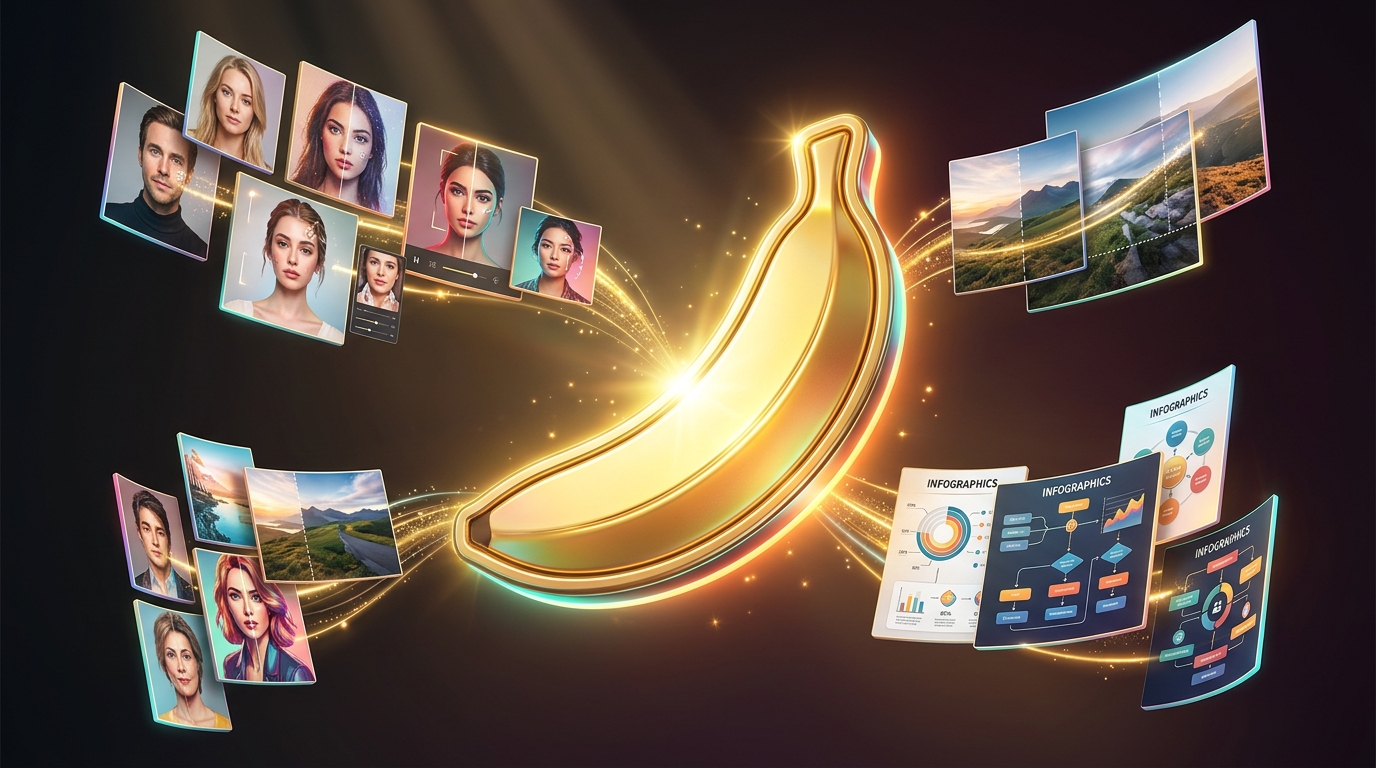
Google rolls out updates to its image models so frequently that keeping up with the names has become a sport of its own. We barely got used to Nano Banana 2 before it was sent into retirement. We are breaking down the fresh Nano Banana 2.1 release without the hype, addressing the questions that usually pop up in comments and chats after every new announcement.
What is Nano Banana 2.1, and is it not a Pro version?
No, it is not a Pro version. Nano Banana 2.1 is a model from the Flash line, meaning it is a fast and affordable workhorse rather than a flagship. Google has updated its image generation and editing model, and Nano Banana 2.1 is built on Gemini 3.6 Flash, maintaining the Flash approach: fast inference at a significantly lower cost compared to the Pro line. In essence, it is a replacement for Nano Banana 2, not a competitor to the Pro version—though, as we will see, the competition here turned out to be quite interesting.
Do we need to rewrite everything urgently, or can we stick with the old version for now?
Google did not leave much time for deliberation here. The 2.1 release came out simultaneously with the announcement of the end-of-life for the previous version: Google announced the release of Nano Banana 2.1 on October 6, 2026, and on the same day Google's documentation deprecated gemini-3.1-flash-image—Nano Banana 2—with the model becoming unavailable on October 29, 2026, and the recommended migration target being gemini-nano-banana-2.1. So, if you have the old model ID hardcoded in your production environment, it is better to change it without delay—it is literally one line of code, not a pipeline redesign.
If it is cheaper than Pro, does that mean the images will be worse?
The "cheaper equals worse" logic does not apply here. According to Google's documentation, Gemini Nano Banana 2.1 is more efficient than Gemini 3 Pro Image (Nano Banana Pro) in a number of parameters, while the price is significantly lower: the price for 1K and 2K images in the Gemini API has been halved compared to the previous version. The benchmarks for character consistency are particularly interesting: for tasks with multiple characters, the model achieved an Elo of 1106, compared to 978 for Nano Banana 2 and 1011 for Pro. In other words, the smaller model outperformed the larger one in this specific parameter—it happens.
What about text and infographics—will we get gibberish instead of letters again?
The main focus of this release is on editing and content handling, rather than just pretty pictures. The announcement mentions improvements in character and object consistency, multi-image editing, masks and sketches, as well as infographic generation, and for the latter task, the model can use Gemini's knowledge and web search data, which helps not only to draw the image but also to work more accurately with factual content. If infographics with numbers previously often turned into abstract art, the model now at least tries not to make up statistics on the fly.
Is it true that it has finally learned to make proper panoramas without seams?
This is one of the most practical points of the update, and yes, it is real. Nano Banana 2.1 is capable of generating images in 1K, 2K, and 4K resolutions, and the update eliminates segmentation artifacts on panoramic and wide-format shots with aspect ratios of up to 1:8 and 8:1. Previously, wide banners and story spreads often had visible seams at the joints—now they promise fewer noticeable stitches. For designers who need non-standard formats for social media or advertising, this is not just cosmetic; it is a time-saver on manual retouching.
What about references and context—has anything changed, or are these just numbers for show?
Things have changed, and quite significantly. The model can combine up to 14 reference images, while retaining the recognizable appearance of up to four characters and accurately conveying the key features of up to ten objects. There is also a choice of reasoning depth: one of the main innovations of Nano Banana 2.1 is the ability to choose the reasoning level—minimal, medium, basic mode, and maximum, plus they added a tool for point-based image editing using masks, where you can select an arbitrary area and ask the model to fix only that part. For serial work with product cards or characters in different scenes, this is much more convenient than rewriting the prompt from scratch every time.
So, what should an average user do with this release?
If you are already working with Nano Banana via a bot or dashboard, no drama is expected—the model has simply become more accurate in editing, cheaper in generation, and has stopped getting confused by seams in panoramas. The main thing is not to cling to the old version out of habit: given the imminent shutdown of Nano Banana 2, switching to 2.1 is not an experiment, but a necessity.
Nano Banana 2.1, like other current image generation models, is already available through GEMERA AI—in the Telegram bot and web dashboard, without the need for separate registration with each developer. If you want to compare it with Seedream, Flux, or Imagen on your real-world tasks, now is the time to try it and see the difference with your own eyes.