Claude Design and the End of the 'Just a Designer' Era: How AI Is Turning the Profession into Orchestration
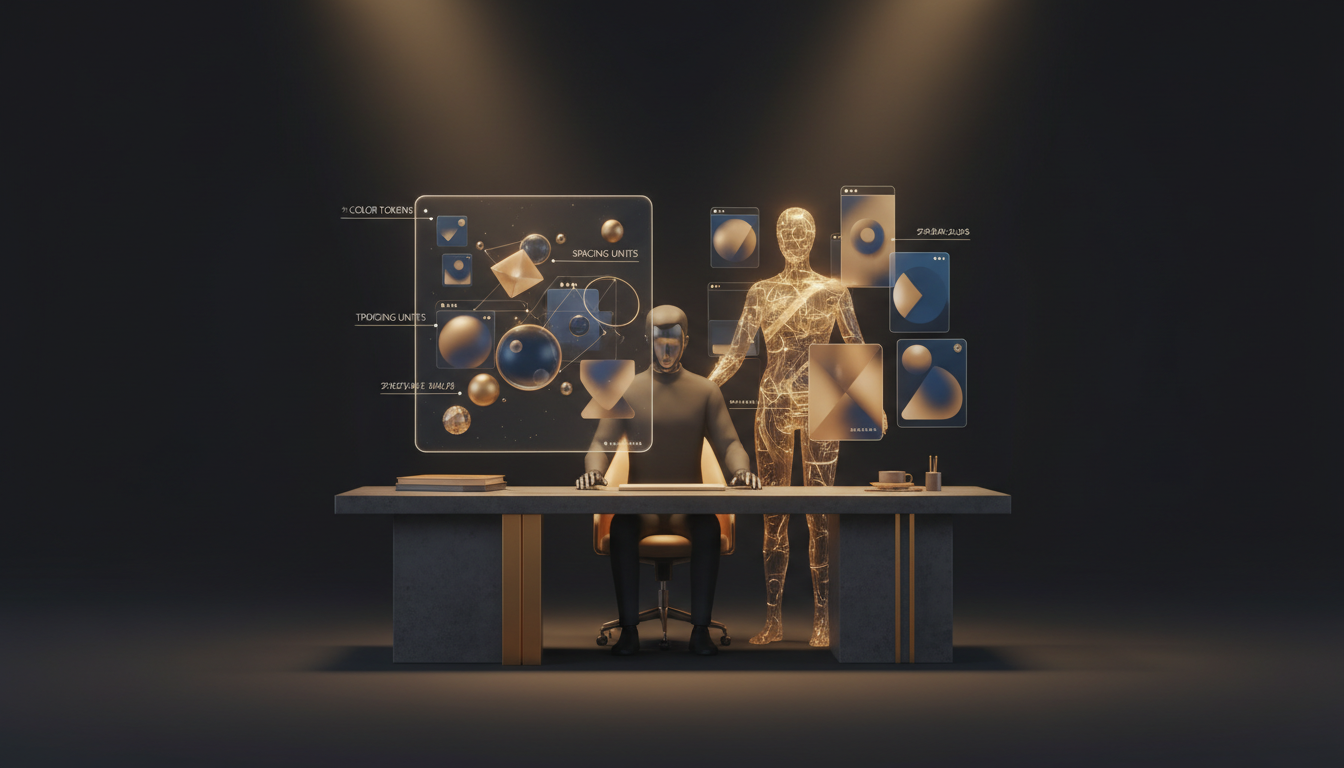
On April 17, 2026, Anthropic quietly rolled out Claude Design—and Figma's stock dropped 7% in a single day. This isn't just another AI design tool. It is the first product to demonstrate that the design profession isn't disappearing, but it is changing radically. Instead of drawing layouts, designers now manage a system that generates them automatically.
What Claude Design Can Do—and Why It Matters
Claude Design works simply: on the left, there is a chat interface with the Claude Opus 4.7 model; on the right, a live canvas with an interactive prototype. You describe the task in text—"a landing page for an HR platform, three client case studies, a contact form"—and you receive not a static image, but functional HTML with CSS and JavaScript.
But the speed of generation isn't the main point. The main point is the design system. During onboarding, Claude reads your codebase, Figma files, and brand book, assembling them into a real design system. From then on, all prototypes are built using your components, your colors, and your tokens. It’s not just "looking like your style"; it is your style.
A senior product designer at the educational platform Brilliant shared that pages which previously required 20+ prompts in other AI tools are assembled in Claude Design in just two. A product manager at Datadog describes the effect differently: the "brief-layout-review rounds" cycle, which used to take a week, now fits into a single conversation.
The Designer Becomes a System Conductor
The most telling case comes from discussions on VC and Reddit. One user wrote: "Without your design system, it's generic. With your design system, it's powerful." Another added: "Seeing everyone call it junk while seeing how well it works with our system is a cognitive dissonance."
This is the essence of the professional shift. Previously, a designer drew every screen by hand. Now, the designer creates the system—components, tokens, rules—and Claude Design applies it to specific tasks automatically. It’s the difference between writing music by hand every time and conducting an orchestra.
Investment analyst Martin Alderson divided design tool users into three segments:
- Professional Designers (33%) — will remain in classic tools; they need the plugin ecosystem and deep collaboration.
- Developers (30%) — will watch which way the wind blows; for them, convenience is more important than habit.
- Non-designers (37%) — marketers, PMs, startups—the direct audience for Claude Design.
But the most interesting part isn't who will leave Figma for Claude Design. It's that designers in the first group are changing, too. They aren't ceasing to be designers—they are becoming architects of systems that generate design.
The Bridge Between Design and Code Is Disappearing
A key feature of Claude Design is its integration with Claude Code. When a prototype is ready, a single "Send to Claude Code" button packs it into a handoff bundle and passes it to an AI developer agent. The agent takes the files and embeds them into the actual repository—not as "here is a layout, write the code yourself," but as "here is the code, integrate it into your codebase."
One developer described their experience: they clicked the button, pasted a command into the terminal, and Claude Code downloaded the bundle, unpacked it, understood the WordPress site structure, converted the HTML into a PHP template, supplemented the existing classes, and opened a pull request. All of this without a single line of code written by hand.
This is a fundamentally new workflow. Design is no longer an artifact passed to a developer as a Figma file and a PDF specification. Design is an object that AI reads and turns into code within the context of a specific project.
Three Skills That Will Become Critical
If Claude Design shows the future of the profession, which skills will become more important?
Systems Thinking. The ability to build a design system that scales and is applied automatically. This isn't about "drawing a pretty button," but about "creating a rule by which buttons will be generated correctly in any context."
Prompt Design and Context Management. The ability to accurately describe a task so that the AI understands not just what to do, but why. One user spent 40 minutes crafting a prompt for a payment provider integration—and it turned out to be faster than explaining the task to a junior and then reviewing the code.
Critical Review and Quality Control. AI generates quickly, but not always correctly. A designer must be able to spot where the model has "hallucinated" a non-existent pattern or applied a component incorrectly. This is a new type of visual literacy—not looking at others' work, but at AI errors.
What Designers Should Do Right Now
Claude Design is currently available only to Pro, Max, Team, and Enterprise subscribers on claude.ai. The rollout is gradual, but many already have access. If you have a subscription, spend an hour experimenting. Try creating a landing page for a real project or assembling a pitch deck.
Be sure to upload your design system—components, tokens, brand book. Without this, the result will be generic; with it, it will be truly yours. One designer fed Claude Design a monorepo with React components on Tailwind, and the model compiled a list of existing buttons, modals, cards, and a palette from tokens—and used only those thereafter.
Try the handoff in Claude Code, even if you don't know how to program. Just see what structure Anthropic considers "ready for development handoff." This will show you where the industry is heading and what design processes will look like in a year.
And most importantly, don't be afraid that AI will take your job. The market has already shown that after the release of such tools, the demand for designers doesn't fall—it grows. Because companies start doing more, and for that, they need people who know how to manage systems, not just draw layouts.
Try New Features at GEMERA AI
Want to test Claude Opus 4.7 and other top models right now? GEMERA AI offers GPT, Claude, and Gemini—for text, images, and code. Everything is in one Telegram bot or web dashboard, without VPNs or complex setups. Start with a free trial and see how AI can boost your projects today.