Claude Opus 4.7 and Codex: Anthropic and OpenAI Kick Off an Upgrade Race
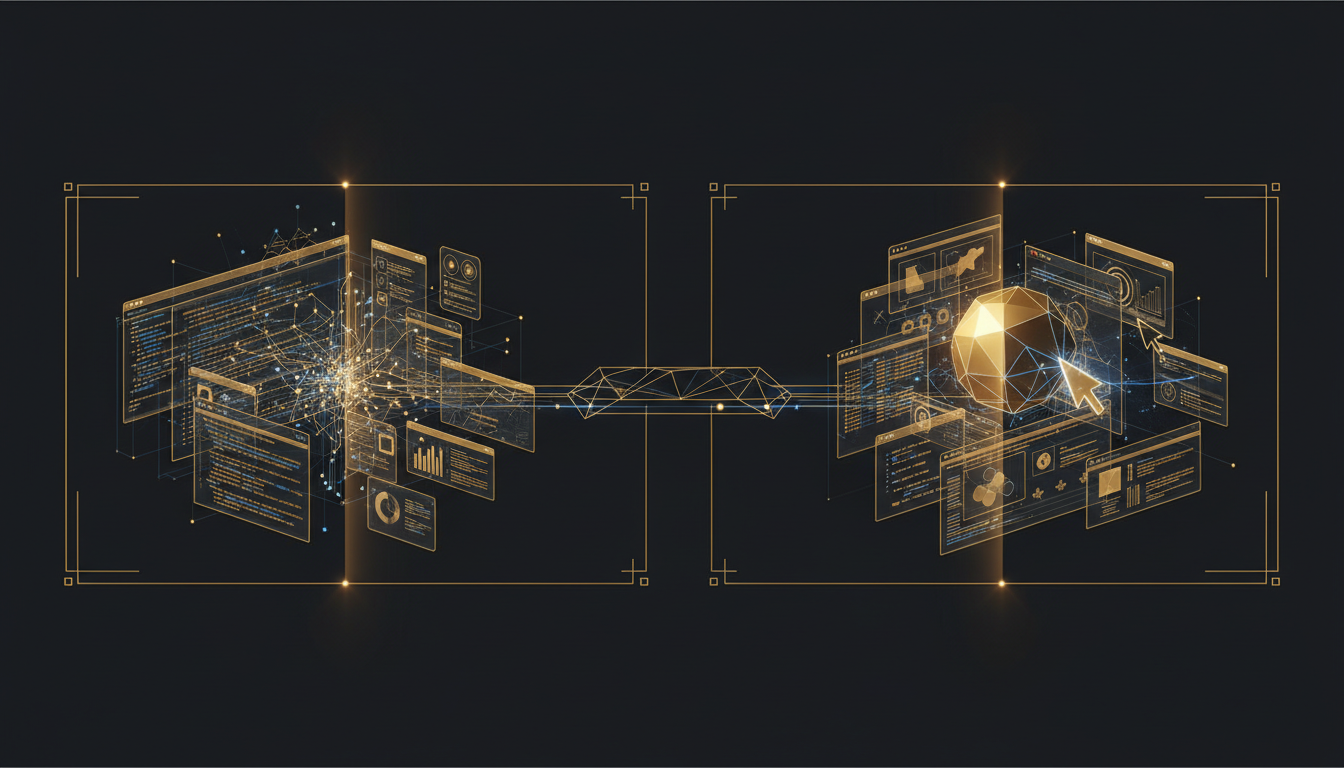
Mid-April 2026 will be remembered by developers for two major releases in quick succession. First, Anthropic introduced Claude Opus 4.7, an updated flagship model with radically improved vision and a more rigorous understanding of instructions. Just a day later, OpenAI rolled out a massive update to Codex, transforming it from a code-writing tool into a full-fledged autonomous agent. Both companies are clearly unwilling to yield an inch to one another.
Claude Opus 4.7: Sees Three Times Better, Follows Instructions More Strictly
Anthropic has focused on three areas: vision, precision, and coding. The model now accepts images up to 2576 pixels on the long side—that is over 3.75 megapixels, three times the previous limit. On the XBOW visual benchmark, the result jumped from 54.5% to 98.5%. This means Claude is much better at parsing dense screenshots, diagrams, and documents—a critical capability for agents that control a computer.
The second change concerns instruction following. The company warns that old prompts may behave differently. Previously, the model interpreted tasks loosely; now, it understands them literally. This is a plus for those who want precise execution, but a minus for those accustomed to flexibility.
In programming, the performance gains have been confirmed by external testers. GitHub recorded a 13% increase on its internal benchmark, Cursor saw growth from 58% to 70%, and Notion reported a 14% gain with a threefold reduction in errors. Rakuten reported a threefold increase in completed production tasks. Vercel noted a new behavior: the model builds proofs of correctness before attempting to write system code.
The price remains the same: $5 per million input tokens and $25 per million output tokens. However, the bill for the same tasks may increase—the updated tokenizer increases consumption by 10–35% depending on the content type.
Cyber Threat Protection and the Cyber Verification Program
Anthropic purposefully weakened the cyber capabilities of Opus 4.7 during training. The model is inferior to the closed Mythos Preview, which the company is not yet releasing publicly due to high risks. Built-in protection blocks requests with signs of prohibited use.
This has caused user complaints: some clients report that the model refuses to write code, perceiving malware in every request. For security professionals who want to use Opus 4.7 for legitimate purposes—such as vulnerability research and penetration testing—Anthropic has launched the Cyber Verification program.
OpenAI Responds: Codex for Full-Cycle Development
The following day, OpenAI introduced a major update to Codex and stated its intention to make it an assistant not just for code, but for the entire development lifecycle. More than 3 million developers use Codex weekly, and the agent is now capable of much more.
The main feature is background computer use. Codex can see the interface, click, type, and work with applications on a computer using its own cursor. Multiple agents can act on a Mac in parallel without interfering with other programs. This is useful where there is no API, but you need to test an interface or complete a user scenario.
The built-in browser allows users to comment on elements directly on the page and give the agent precise instructions. OpenAI plans to expand this mode into full browser control. Image generation via gpt-image-1.5 turns Codex into a tool for working with mockups, visual concepts, and game scenes.
Memory, Automation, and "Work for Later"
Codex has learned to remember context from past dialogues—personal preferences, corrections, and useful information. The agent plans future work itself and automatically "wakes up" to continue a long-term task days or weeks later. This is no longer a model that "answers and finishes," but a model that "manages a workflow and returns to it on its own."
OpenAI has launched over 90 additional plugins—integrations with Atlassian Rovo, CircleCI, CodeRabbit, GitLab Issues, Microsoft Suite, Neon by Databricks, Remotion, and Render. Codex can open files in the sidebar with extended previews for PDFs, spreadsheets, slides, and documents, work with multiple terminal tabs, and connect to remote devboxes via SSH.
What This Means for Developers
Both companies are moving in the same direction: from point-in-time assistants to persistent working agents. Claude Opus 4.7 focuses on precision, vision, and coding. Codex expands use cases—computer control, browser interaction, tool integrations, memory, and long-term tasks.
For teams, this means AI assistants are no longer just code generators. They are becoming colleagues that can manage processes, remember context, suggest next steps, and work with interfaces without APIs. The race between Anthropic and OpenAI is only accelerating—and users are the ones winning.
Try It Yourself at GEMERA AI
Want to test the capabilities of Claude Opus 4.7 and other top models? At GEMERA AI, you get access to Claude, GPT, Gemini, and other neural networks through a convenient interface—no VPN required, and payment is available with Russian bank cards. Compare models on real-world tasks and choose the one that suits you best.