Codex, Cursor, and Claude Code are no longer competing — they are now layers of a single stack
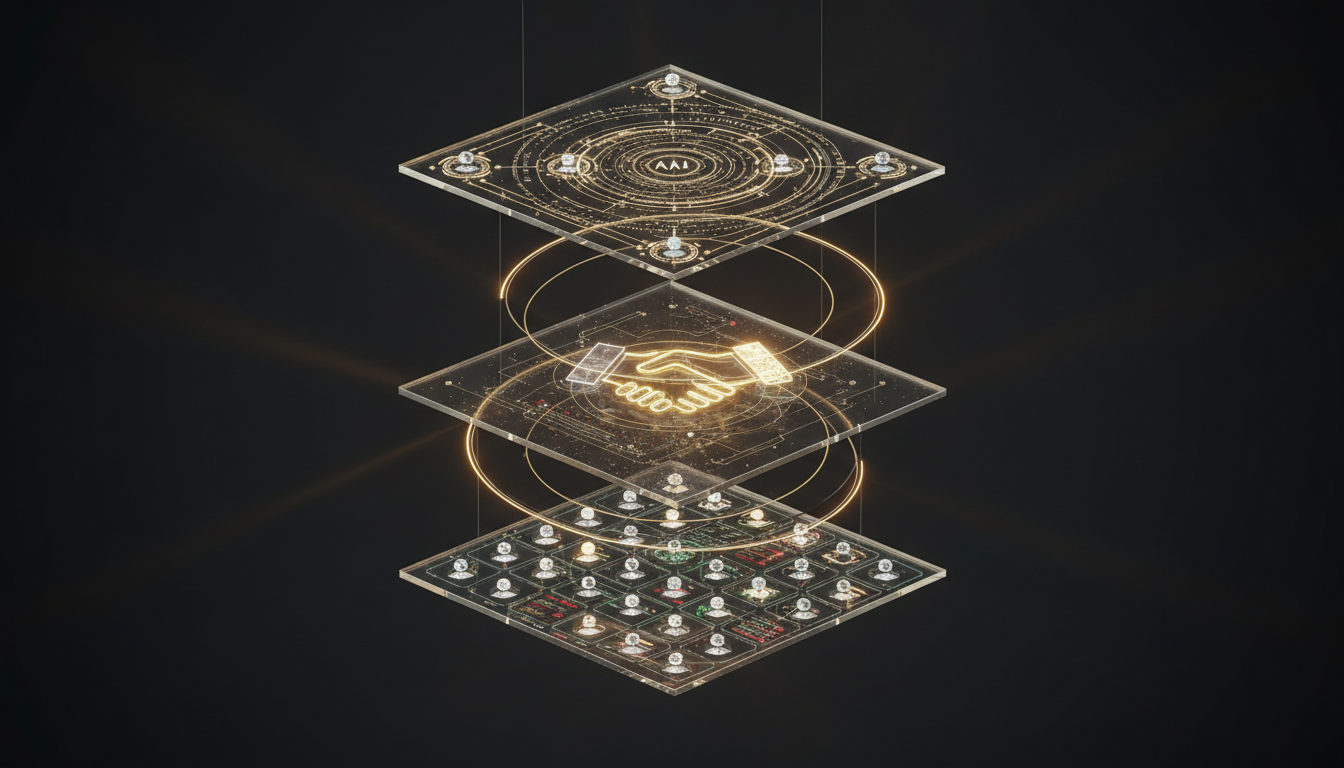
Instead of collapsing into a single product, the AI coding market is stratifying into specialized layers. In early April 2026, OpenAI released an official Codex plugin for Anthropic's Claude Code, Cursor introduced a redesigned Agents Window interface for managing parallel agents, and early adopters began combining all three tools into a single stack — not as competitors, but as complementary layers.
Three launches in one week
On April 2, Cursor released version 3, codenamed Glass. The main change is the replacement of the Composer panel with a dedicated Agents Window designed for managing multiple AI agents simultaneously. Developers can now run parallel tasks on local machines, cloud sandboxes, and worktrees from a single sidebar. New features include Agent Tabs for viewing multiple conversations at once, a /best-of-n command for sending a single prompt to multiple models in isolated environments, and a Design Mode for annotating UI elements in the built-in browser.
Three days earlier, OpenAI published the codex-plugin-cc plugin on GitHub, which installs directly into Claude Code. The plugin provides six commands: /codex:review runs a standard code check, /codex:adversarial-review tests solutions for authentication and race conditions under load, and /codex:rescue completely hands off the task to Codex as a sub-agent. The review gate feature allows Codex to automatically verify Claude's output before completion, blocking the commit if issues are detected. This is an official OpenAI product integrated into a direct competitor's product, distributed under the Apache 2.0 license.
Three layers of the stack are forming
Orchestration layer. This is where Cursor 3 resides. Its Agents Window is not an editor with AI tacked on, but a management plane for groups of coding agents. The interface displays all active agents in the sidebar, regardless of whether they were launched from a desktop, mobile device, or integrations like Slack and Linear. Google reached a similar conclusion with Antigravity, announced in November 2025 following a $2.4 billion licensing deal with Windsurf: the interface is split into an Editor View for direct coding and a Manager Surface for launching and monitoring multiple agents across different workspaces.
Execution layer. This is where Claude Code and OpenAI Codex operate — agents that actually write, test, and debug code. A February 2026 survey of 906 engineers by The Pragmatic Engineer showed that Claude Code is the most widely used AI coding tool, with 46 percent of respondents rating it as their "favorite." According to SemiAnalysis, it accounted for approximately 4 percent of all public GitHub commits as of March 2026, with a projection of 20 percent by the end of the year. The number of weekly active Codex users has exceeded 3 million, up from 2 million just a month earlier.
Verification layer. This is the newest layer, which utilizes the Codex plugin. When Claude writes code and Codex reviews it, the reviewer is not a participant in the writing process — it does not share the same internal assumptions and identifies different classes of errors. The adversarial review command tests authentication, data loss, and race conditions under load. Cross-checking models from different providers solves a problem that a single model cannot: when you ask the same model to review the code it wrote, structural bias is inevitable.
Why compatibility instead of vendor lock-in
The most telling strategic signal here is that OpenAI developed a plugin for an Anthropic product. The traditional strategy dictates: lock in users, create a closed ecosystem, and make switching expensive. OpenAI is doing the exact opposite, and economic factors explain why.
Claude Code has built a large user base among professional developers. Instead of waiting for them to switch, OpenAI integrated Codex where they are already working. Every review initiated by the plugin generates usage that counts toward a ChatGPT subscription or API key. Zero acquisition cost, pay-as-you-go. Anthropic's open plugin architecture based on MCP made this possible. Both companies have recognized that developers will use multiple tools regardless of the circumstances — the only question is whether your tool is in the stack or outside of it.
Codex is no longer just about code
In April 2026, OpenAI released a major update to Codex — exactly on the anniversary of the Codex CLI launch. The main new feature is background computer control: the agent sees the screen, clicks with its own cursor, and types in any application, including those without an API. Multiple agents can work on a Mac in parallel with the user without stealing focus. For now, the feature is only available on macOS; users in the EU and UK will receive it later.
The application now features a built-in browser for commenting on elements and image generation via gpt-image-1.5. The plugin catalog has grown to include over 90 integrations — among them Atlassian Rovo for JIRA, CircleCI, CodeRabbit, GitLab Issues, Microsoft Suite, Neon by Databricks, Remotion, and Render. Automations have learned to reuse existing threads and continue long-running tasks — Codex now sets "alarms" for itself and returns to work days or weeks later. Memory has been rolled out in preview: the agent remembers user preferences, edits, and context that previously had to be manually provided via system instructions.
What this means for developers
If this composite model persists, three things will change in the way developers work:
Model selection becomes an infrastructure decision. The /best-of-n command in Cursor 3 sends a single task to multiple models in isolated worktrees and compares the results. Model selection is determined by workload characteristics rather than brand loyalty: Claude for precision during complex refactoring, Codex for throughput during parallel tasks.
The editor is starting to lose ground. For 40 years, the code editor has been the center of gravity in software development. Cursor 3's Agents Window and the Antigravity Manager Surface are directly challenging this. The orchestration layer is beginning to compete with the editor as the primary interface.
Code review is shifting toward adversarial testing. Cross-checking models from different providers, where one model writes the code and another challenges it, is the most promising strategy for mitigating the "sycophancy" problem in AI-assisted development. As this approach evolves, it may become a standard stage in CI/CD pipelines.
The coding agent stack is forming faster than many expected. Cursor is claiming a spot at the orchestration layer, Claude Code and Codex are competing and collaborating at the execution layer, and cross-checking is opening up a verification layer that didn't exist six months ago. You can try GPT-4, Claude, and other models for coding and automation at GEMERA AI — via our Telegram bot or web dashboard, without a VPN and with payment via Russian bank cards.