DeepSeek V4 vs. GPT-5.4: Six Questions About the New Chinese Model
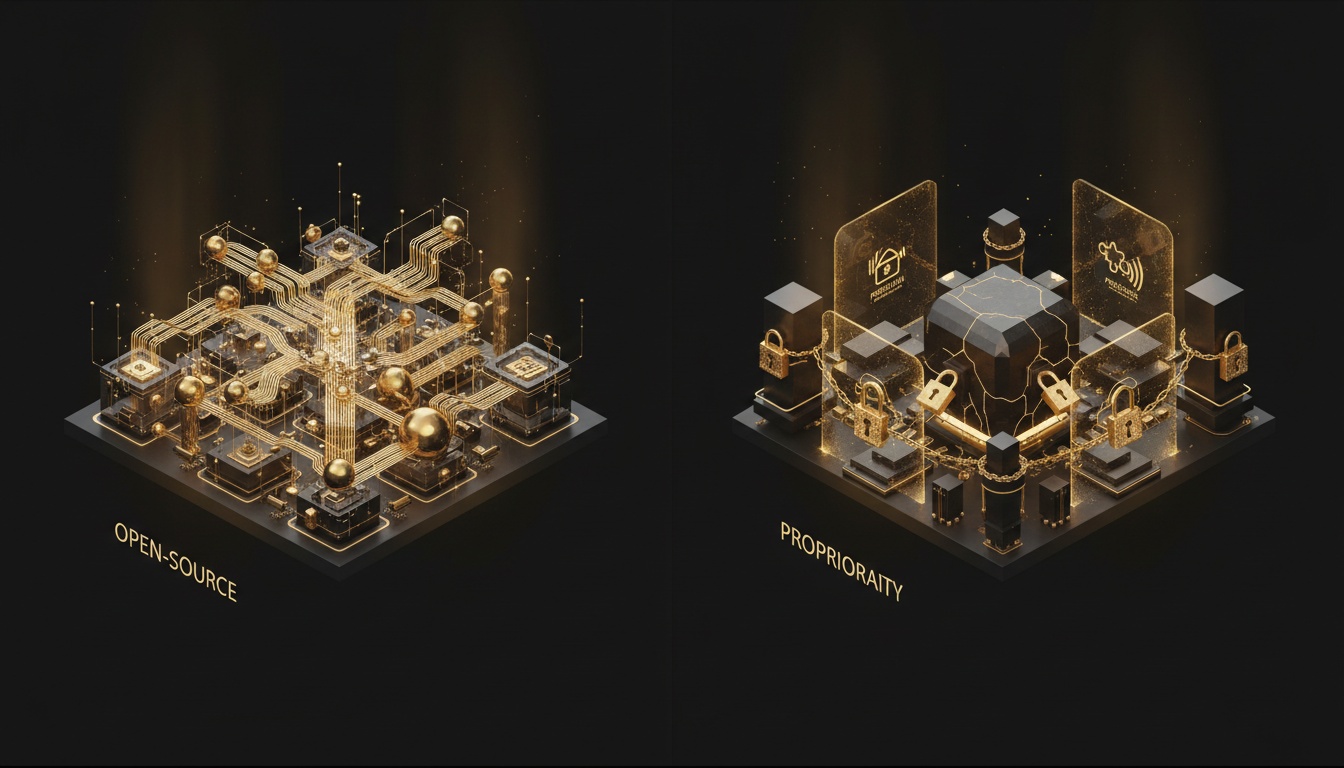
DeepSeek has introduced V4—two new models, V4 Pro and V4 Flash, which claim to be the most powerful open-source solutions in the world. The company states that it has nearly closed the gap with GPT-5.4 and Gemini 3.1 Pro in programming and reasoning tasks. At the same time, the price remains significantly lower than that of its competitors.
We break down the six main questions about the new model—from architecture to real-world use cases.
How does V4 differ from previous DeepSeek versions?
V4 is built on a mixture-of-experts architecture: only a portion of the parameters are activated when performing a task, which reduces operating costs. V4 Pro contains 1.6 trillion parameters, with 49 billion active. It is the largest open model by parameter count at the time of release.
The lightweight version, V4 Flash, has 284 billion parameters, with 13 billion active. Both models support a context window of 1 million tokens—enough to load large documents or codebases.
Is it true that V4 has caught up to GPT-5.4 and Gemini 3.1 Pro?
Almost, but not entirely. DeepSeek claims that V4 shows comparable results in agentic coding and reasoning tasks. In programming competitions, the model truly competes with GPT-5.4.
However, in knowledge-based tests, V4 still lags slightly behind the latest models from OpenAI and Google. The company acknowledges a lag of approximately three to six months behind cutting-edge solutions. In other words, V4 is not a direct competitor to the flagships, but a very close alternative.
How much does working with V4 cost compared to GPT-5.4?
V4 Flash costs $0.14 per million input tokens and $0.28 per million output tokens. V4 Pro costs $0.145 per million input tokens and $3.48 per million output tokens.
For comparison: OpenAI and Anthropic charge tens of dollars for a comparable volume of output tokens in their flagship models. The price difference can be up to tenfold—especially when working with large volumes of generation.
Which tasks does V4 solve best?
The strong suit of V4 is programming. The model shows the best results among open solutions in agentic coding tasks: breaking down complex tasks into steps, writing and debugging code, and working with APIs.
V4 also handles reasoning well—logical chains, data analysis, and information structuring. The one-million-token context window allows you to load entire codebases or long documents for analysis.
Can V4 be used for image or video generation?
No. Both versions of V4 work only with text. Unlike many closed-source competitors that can already process and generate images, audio, and video, DeepSeek is currently focused on text-based tasks.
If you need multimodality—generating images, video, or music—you will have to use other tools. For example, Gemini 3.1 Pro with Veo 3.1 and Nano Banana 2, or GPT-5.4 with DALL-E integration.
Is it worth switching to V4 from GPT or Claude?
It depends on your tasks and budget. If you work with programming, agentic scenarios, or large volumes of text generation, V4 can be a cost-effective alternative. The price is significantly lower, and the quality in these tasks is comparable.
If knowledge, multimodality, or maximum precision in complex analytical tasks are important to you, GPT-5.4 and Gemini 3.1 Pro are still ahead. V4 lags behind them by a few months, but the gap is closing rapidly.
Both DeepSeek models—V4 Pro and V4 Flash—are available in GEMERA AI, along with GPT, Claude, and Gemini. You can compare them in real-world tasks and choose the optimal tool for your scenarios.