Fact vs. Fiction in Automation: What You Should Trust AI With
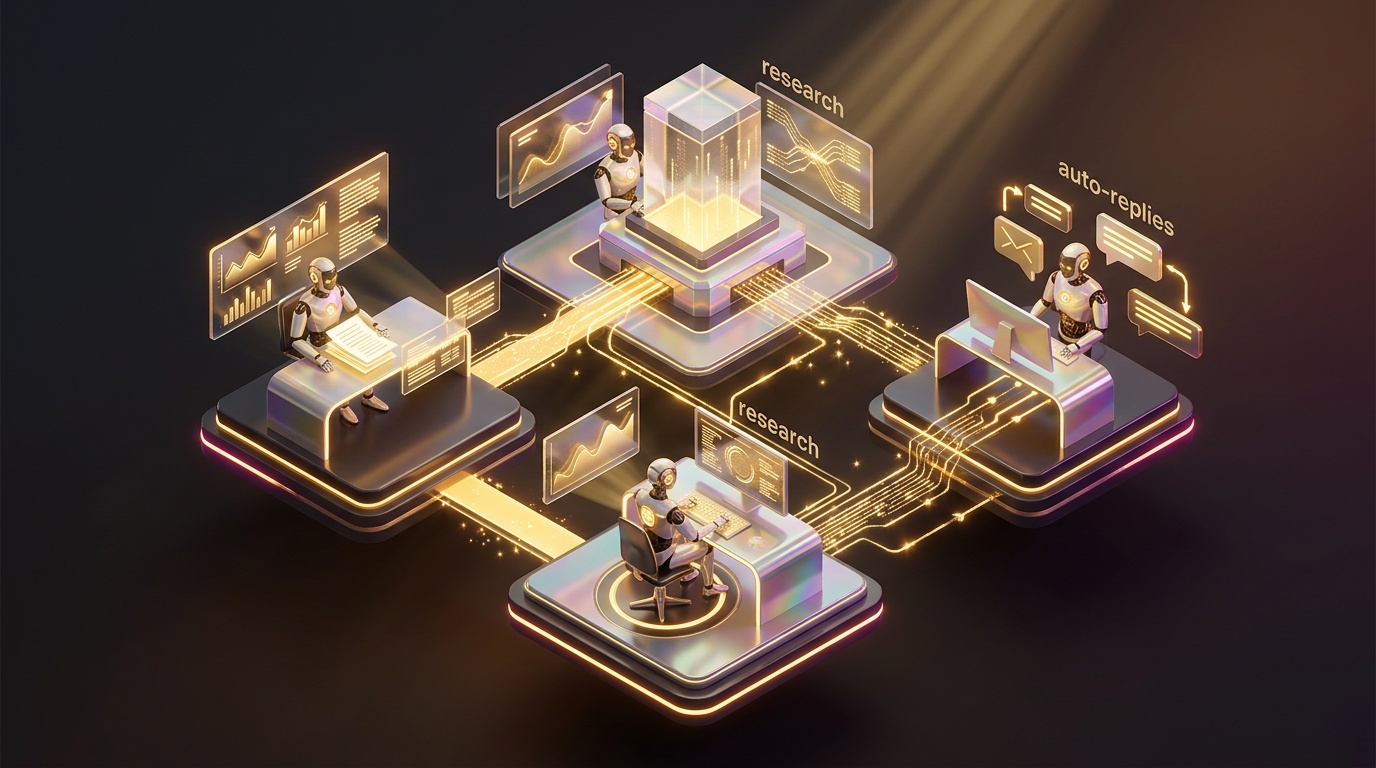
Automating routine tasks with AI has rapidly become part of the workflow for many companies. However, there are many myths surrounding the capabilities of AI agents. Let's break down some common misconceptions and find out what you can actually trust AI with today.
Myth 1: AI can completely replace humans in document processing
This is perhaps the most common misconception. While neural networks can significantly speed up document workflows by scanning and structuring data, identifying errors, and suggesting improvements, they are not a total replacement. For example, Anthropic recently introduced Computer Use, an agent capable of interacting with local files on your computer, including integrations with services like Asana and Notion [creati.ai]. However, this AI only assists humans rather than replacing them entirely. It requires confirmation before taking critical actions and cannot always make independent decisions.
Myth 2: AI agents are perfect at research
You often hear that AI can conduct research quickly and effectively, replacing the entire process. In reality, while agents can help gather primary data and draw some conclusions, this does not always lead to accurate or deep results. They lack the ability to critically analyze information and draw the complex conclusions required in professional research. Therefore, you should not rely solely on the results provided by an AI agent.
Myth 3: AI can fully automate auto-replies without human intervention
Automating auto-replies is one of the key tasks companies try to solve with AI. AI can indeed handle standard inquiries and even collect contact information, as seen with chatbots like GigaChat or Smartbot [habr.com]. However, they only resolve a portion of queries—about 70-80%—while escalating complex cases to a human. This means operator involvement remains necessary, especially in situations requiring an individualized approach.
Myth 4: AI is always accurate and error-free
Another myth is the absolute accuracy of AI. Yes, modern algorithms can be highly precise, but they still make mistakes. A prime example is accounting, where AI can quickly analyze data and suggest solutions, but the final verification must still be performed by a human [42clouds.com]. Errors can be caused by poorly specified tasks or inaccuracies in the source data.
So, if you want to automate routine tasks with AI, it is important to understand that it remains a tool that requires human oversight.
If you would like to learn more about the capabilities of AI and try them in action, we invite you to test the models at GEMERA AI. Here, you can evaluate how automation can truly simplify your work while maintaining quality and control.