Figma Make Has Turned Designers Into Developers: How Two-Way GitHub Integration Works
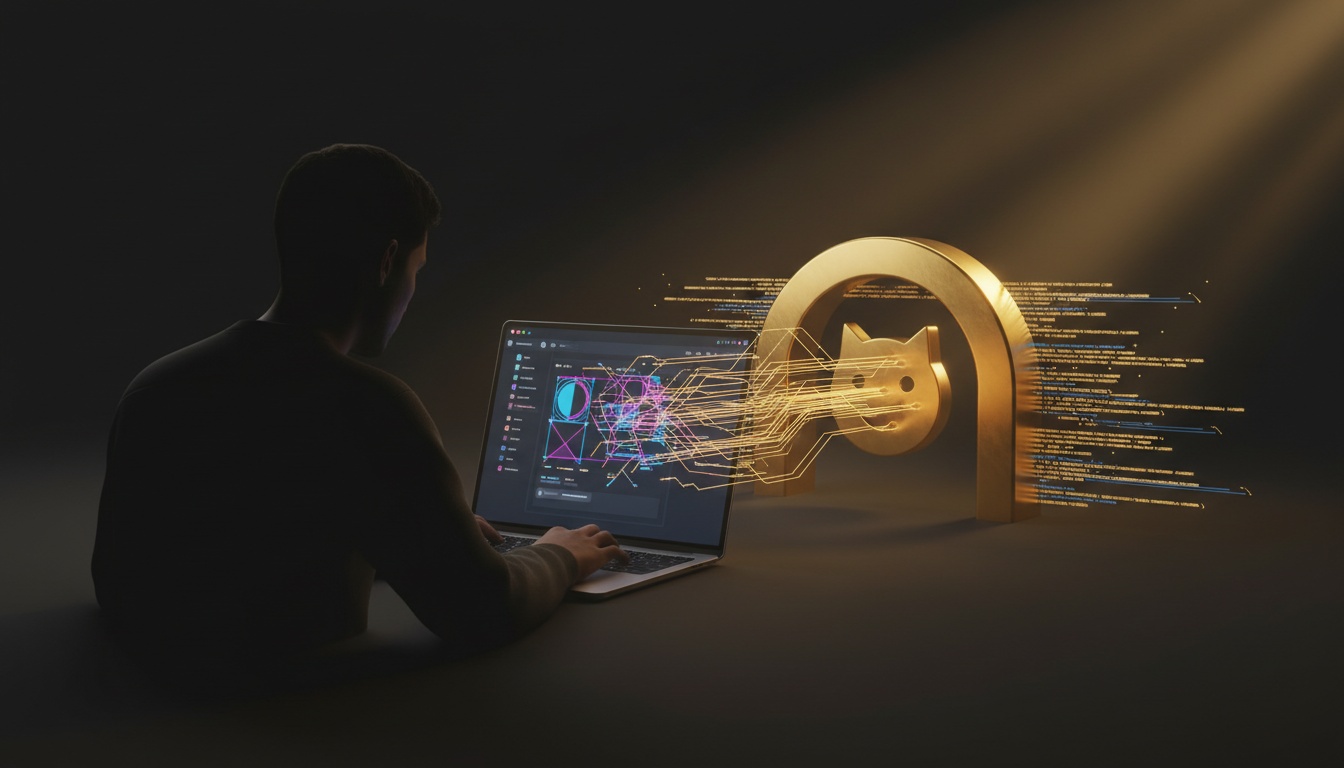
In May 2026, Figma transformed its AI tool, Make, from a prototype sandbox into a full-fledged development environment with two-way GitHub integration. Now, designers can open real repositories, modify code through a visual interface, and submit changes via standard Pull Requests—without copying, duplicating, or losing version history.
How the New Approach Works
Previously, the path from mockup to production looked like this: the designer draws in Figma, the developer rewrites everything by hand, and then an endless chain of revisions begins. Now, the process has changed:
- Connect a Git repository directly in Figma
- Select an interface element on the canvas
- Write in plain language: "Style the button according to the brand, add a hover animation, and make it mobile-responsive"
- Multi-model AI (Claude 3.7 Sonnet, Claude Opus, and Gemini) analyzes the existing code and design system to generate changes
- Review the result, make edits, and create a Pull Request with a single click
The key difference from previous attempts is that this is not about exporting code from a mockup, but working with actual production code. You aren't creating a new project from scratch; you are editing what is already running in production.
Why This Matters for the Market
Following its IPO in July 2025, Figma's stock soared to $115 before plummeting by 81 percent to $21–$22. The company found itself under pressure as investors shifted from standard SaaS to pure AI. Figma Make is a powerful response to this challenge. The company is demonstrating that it is not just a tool for pretty pictures, but a genuine platform that bridges the gap between design and code.
Statistics confirm the demand: 45 percent of designers already write code occasionally, and 59 percent of product managers work with code regularly. The line between professions is blurring, and Figma is providing the tool for this transition.
Who This Works Best For
The new integration is particularly useful for three groups:
- Designers with basic coding skills — you can now independently change colors, typography, spacing, and animations, sending ready-to-go PRs directly to engineers
- Product managers — you can quickly test hypotheses and make minor edits without waiting in line for developers
- Teams tired of the eternal design-versus-development conflict — a unified environment eliminates half of the communication issues
At the same time, the tool does not replace developers. Final review, optimization, and merging are still handled by an engineer. However, the number of iterations and the time spent on coordination are reduced significantly.
What's Next
Figma Make is part of a broader "vibe coding" trend, where professionals from related fields gain access to development tools through natural language and visual interfaces. Similar experiments are being conducted by Cursor, Claude, and other platforms, but Figma is the first to link this to design and production code.
It is too early to say that designers will become the new programmers. But they have certainly gained the ability to influence the final product directly, bypassing a long chain of approvals. And this changes not only the tools but the very structure of teams.
Want to try how Claude 3.7 Sonnet, Gemini, and other models work for coding and design? They are all available on GEMERA AI—via our Telegram bot or web dashboard. Connect and experiment with the same technologies used by major platforms.