GPT-5.5 and the New Era of Cyber Defense: How OpenAI Is Embedding Security into Code
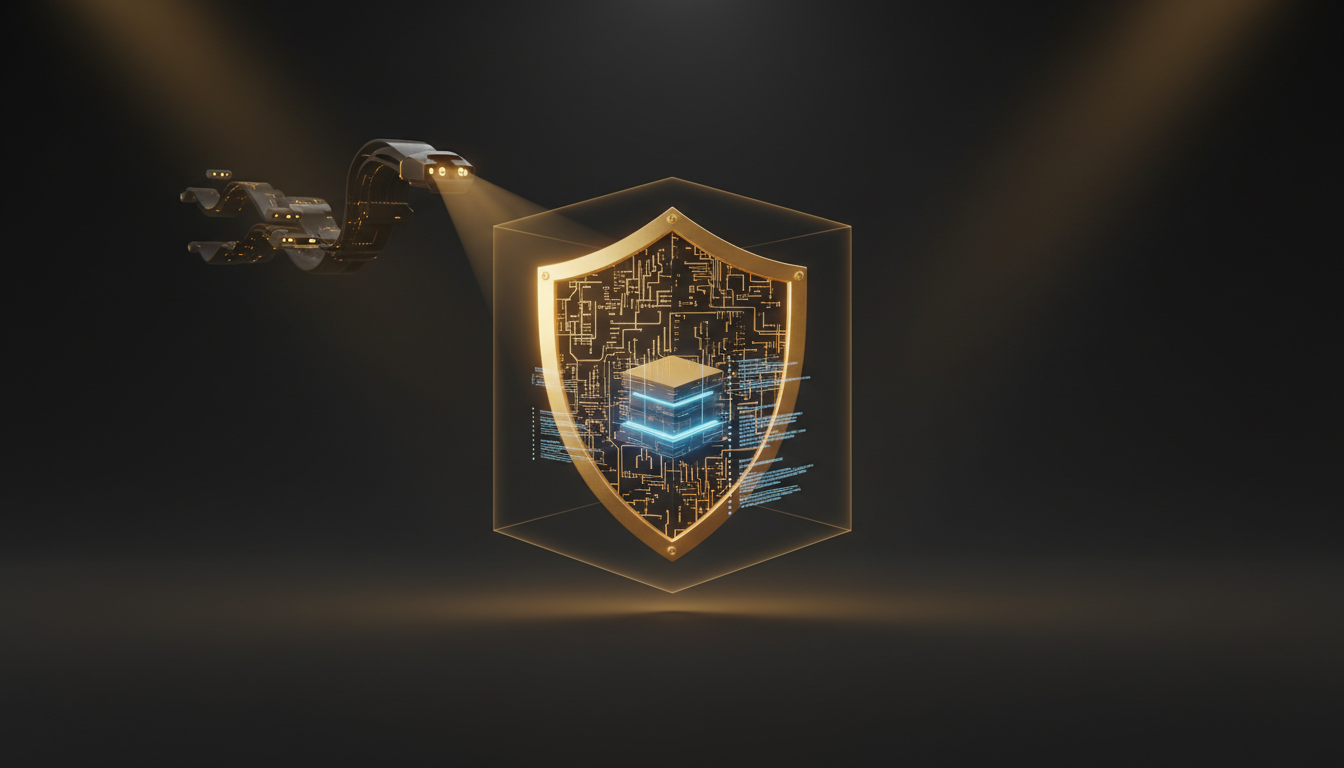
In April 2026, OpenAI released GPT-5.5, a model that, for the first time, received a 'high cyber capability' status under the company's internal preparedness framework. This is more than just a technical upgrade: the company has openly acknowledged that the new model can be used to find vulnerabilities in code at a qualitatively different level. Simultaneously, it has launched a comprehensive set of measures to turn this risk into an advantage for defenders.
What has changed in the approach to security
Previously, OpenAI evaluated models on a risk scale but did not publicly announce transitions to new levels. With GPT-5.5, the company has openly stated for the first time that the model has reached a 'high' level in cybersecurity, as well as in biological and chemical domains. This is not yet a 'critical' threshold that would require radical release restrictions, but it is serious enough to warrant a revision of access rules.
OpenAI conducted extensive testing with external experts, added targeted checks for offensive cyber scenarios, and implemented automated usage monitoring. Some users have already encountered new classifiers that block or warn about potentially dangerous prompts—the company admits the system is not yet perfect and may cause frustration with false positives.
Trusted Access for Cyber: Access for Verified Professionals
Concurrent with the GPT-5.5 release, OpenAI launched the Trusted Access for Cyber pilot program. This provides closed access to the model's advanced capabilities for verified security professionals, researchers, and teams tasked with finding vulnerabilities in critical infrastructure.
The idea is simple: provide defenders with the tool before it becomes available to the general public and gather feedback on how the model is used in real-world cyber defense scenarios. Program participants gain access to features that are either limited or entirely unavailable in the standard version of ChatGPT or the API.
The program is currently in closed beta, but OpenAI plans to expand it in the coming months. Selection criteria include verified experience in information security, participation in bug bounty programs, or employment in security teams at major organizations.
Aardvark and Codex Security: Tools for Vulnerability Discovery
In parallel, OpenAI is expanding the closed beta of Aardvark, a security research agent that becomes the first product in the Codex Security line. Aardvark uses GPT-5.5 for automated vulnerability discovery in codebases: it scans projects, identifies potential weaknesses, and suggests fixes.
As part of the launch, OpenAI has also begun collaborating with maintainers of open-source projects. The company offers free codebase scanning for widely used libraries and frameworks—for example, a security researcher recently used Codex to discover vulnerabilities in Next.js, which were publicly disclosed last week.
This is an attempt to build a defense ecosystem: instead of simply releasing a powerful tool and hoping it doesn't fall into the wrong hands, OpenAI is actively investing in ensuring that defenders gain an advantage in time and capabilities.
Cyber Defense Grants: $10 Million in API Credits
OpenAI also announced an expansion of its cybersecurity grant program. While the company allocated $1 million for research in 2023, the budget has now grown to $10 million—though in the form of API credits rather than direct funding.
Credits can be used to access GPT-5.5 and GPT-5.5 Pro via the API, which is particularly important for teams working with large volumes of code or building automated security analysis systems. Priority is given to projects related to open-source software and critical infrastructure.
This is not charity—it is an investment in reputation. OpenAI understands that if GPT-5.5 is used for large-scale attacks before it is used for defense, it will undermine trust in the company and the entire generative AI industry. Therefore, the bet is on ensuring that defenders are the first to learn how to use these new capabilities.
The Balance Between Openness and Control
OpenAI's approach is controversial. On one hand, the company openly acknowledges risks and invests in security measures. On the other, it creates tools that could potentially be used for attacks and decides who gets access to them and who does not.
Critics note that programs like Trusted Access for Cyber create inequality: large companies and verified researchers get access to cutting-edge capabilities, while independent specialists are left behind. Others point out that any restrictions can be bypassed—if a model is powerful enough, sooner or later someone will find a way to use it for unintended purposes.
OpenAI responds that there is no alternative: fully open access to a model with high cyber capabilities would create more risks than a managed deployment with monitoring mechanisms. The company emphasizes that the restrictions are not absolute—they create a temporary advantage for defenders while the industry adapts to the new capabilities of AI.
What this means for developers and security teams
For developers, GPT-5.5 opens up new possibilities in automating code reviews and bug hunting. The model has a better understanding of code context, can track dependencies, and suggest fixes that account for the architecture of the entire project. This is especially useful for large codebases where manual auditing takes weeks.
For security teams, GPT-5.5 becomes a tool that can accelerate vulnerability discovery and threat analysis. But this also means that attackers get access to the same capabilities—and the race between attackers and defenders moves to a new level.
OpenAI is betting that the combination of technologies (monitoring, classifiers, security training) and access programs (Trusted Access, grants, free scans) will create a sufficient advantage for defenders. However, the final result will only become clear in a few months—when the model is released for broad access via the API and becomes part of real-world workflows.
Try the capabilities of GPT-5.5 at GEMERA AI
Want to test GPT-5.5 for coding or data analysis? At GEMERA AI, you can access the latest OpenAI models, including GPT-5.5, through a convenient Telegram bot interface and web dashboard. You can compare it with Claude Opus 4.7 and Gemini 3.1 Pro on real-world tasks—from writing code to research queries. Try for yourself how much the new model has changed the approach to working with AI.