GPT-5.5: How OpenAI Reclaimed the Top Spot in Rankings
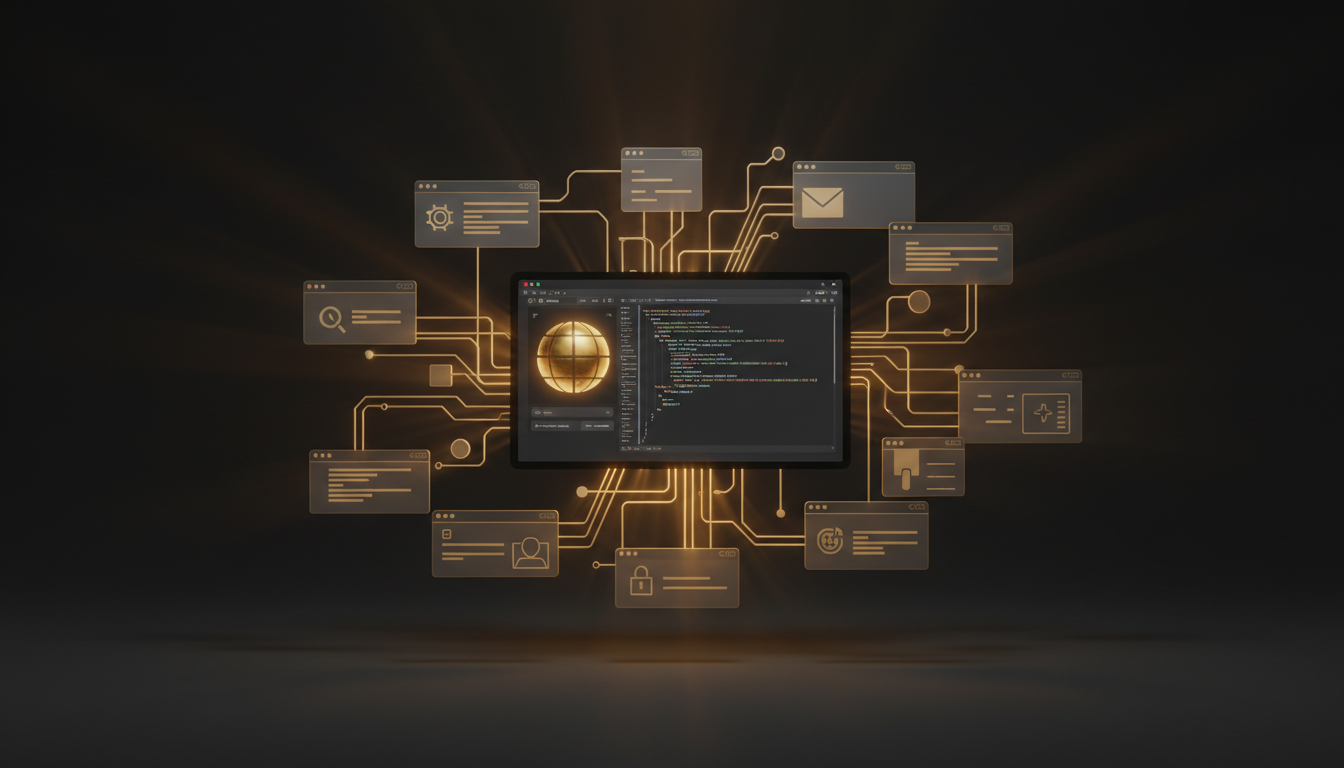
In May 2026, OpenAI released GPT-5.5—and this update feels much more significant than just another version number. For the first time since the release of GPT-4.5, the company has fully retrained the base model rather than simply refining an existing one. The result: a return to the top spot in public rankings and a noticeable lead over Anthropic and Google.
What's New in GPT-5.5
The main change is the emphasis on programming and agentic workflows. The model has absorbed the capabilities of GPT-5.3-Codex while improving its work with tools, software environments, spreadsheets, presentations, and documents. This is OpenAI's first universal model with native computer-use capabilities—agents can now execute complex workflows across different applications.
GPT-5.5 supports up to 1 million tokens of context, allowing agents to plan, execute, and verify tasks over long timeframes. Tool search has also been added, enabling the model to find and use the necessary connectors faster without sacrificing intelligence.
Another important point: GPT-5.5 has become the most token-efficient reasoning model. It uses significantly fewer tokens to solve tasks compared to GPT-5.2, which reduces limit consumption and increases speed.
Fast Mode and Availability
A Fast mode has been introduced in Codex, which generates tokens 1.5 times faster at 2.5 times the standard cost. This is aimed at interactive programming sessions where waiting for a response disrupts the workflow.
The model is already available to users on Plus, Pro, Business, and Enterprise plans in ChatGPT and Codex. There is also a more powerful GPT-5.5 Pro version for those who need maximum performance for complex tasks.
Security and Competition
OpenAI classifies GPT-5.5 as a model with a high level of capability in cybersecurity and biological/chemical fields. This is still below the critical threshold, but the company has added targeted checks and stricter classifiers to assess cyber risks. Some users may initially find these classifiers annoying—OpenAI acknowledges this.
In April, Anthropic released a preview of Claude Mythos with its own approach to cybersecurity. Now, the competition in the field of advanced technologies protected by safety mechanisms is clearly gaining momentum.
Practical Scenarios
GPT-5.5 is changing the approach to professional work. Here are a few examples:
- Routine Automation — the model can schedule meetings, process data from spreadsheets, and create presentations without constant clarification.
- Agentic Programming — support for long workflows with up to 1M tokens of context allows agents to perform complex tasks across different applications.
- Token Savings — improved reasoning efficiency reduces limit consumption, which is especially important for mass use via API.
GPT-5.5 handles complex real-world work accurately, efficiently, and quickly, delivering exactly what you asked for with fewer follow-up questions. This is the first release in a long time that feels like more than just another version number.
Want to try GPT-5.5 and other cutting-edge models at work? GEMERA AI provides access to all the flagships—from OpenAI to Anthropic and Google—via a convenient Telegram bot interface and web dashboard. Compare for yourself which model handles your tasks best.