Hailuo vs. Wan: Open Models vs. Commercial Solutions in Video Generation
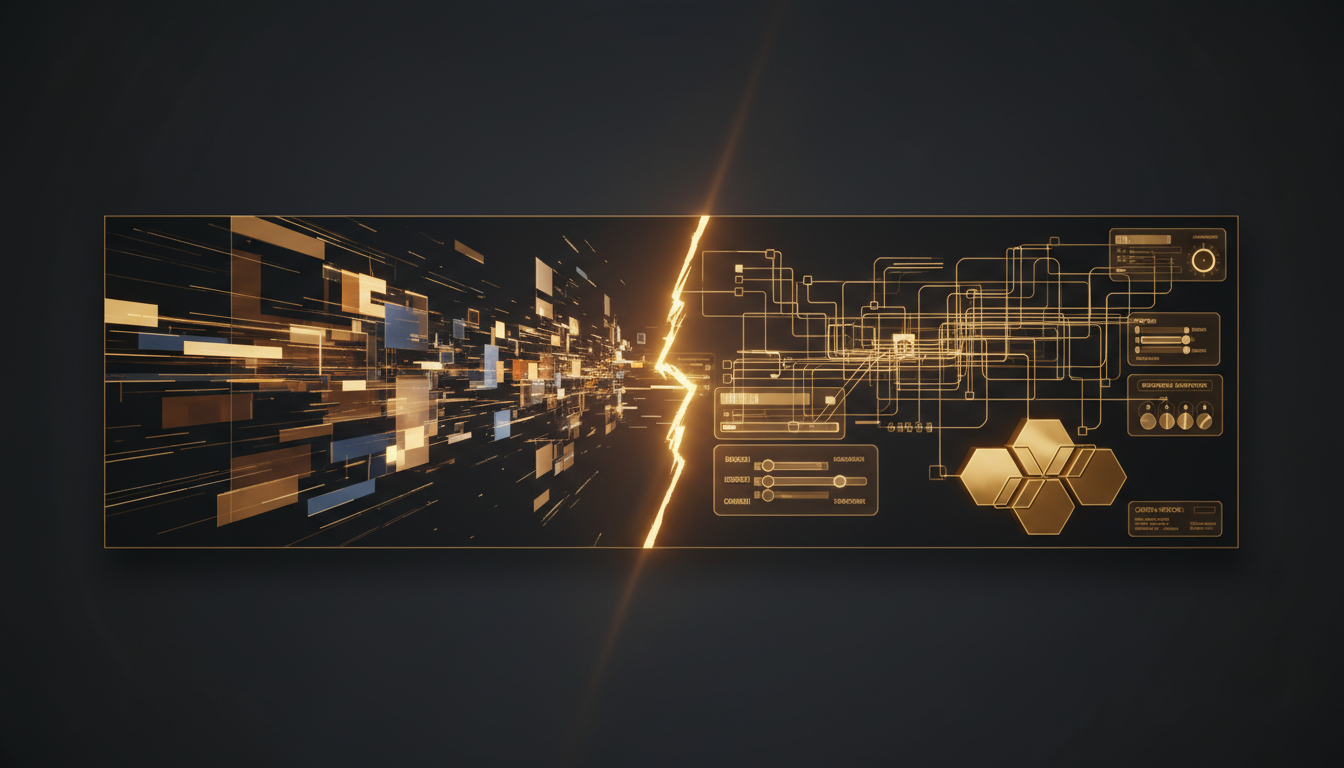
While ByteDance, Google, and Kuaishou compete with top-tier models, an alternative trend has emerged in the video generation market: the clash between speed and openness. MiniMax (the creator of Hailuo AI) has released Hailuo 2.3 with a focus on fast generation and animation, while Alibaba has updated Wan 2.5 as the only fully open solution under the Apache 2.0 license. We break down when to choose a speed-oriented subscription and when to opt for a self-hosted model.
Hailuo 2.3: Betting on Speed and Anime
MiniMax positions Hailuo as the fastest model on the market. Standard 6-second clips are generated in 30–60 seconds—2–3 times faster than Kling 2.6 (2–4 minutes) or Veo 3.1 (3–5 minutes). This is achieved through the video-01-live model for real-time generation and an optimized rendering pipeline.
A key feature is its Live2D animation capabilities. The model has learned to create anime-style characters with natural facial expressions and movements, making it popular among TikTok content creators and SMM managers. According to hailuoai.video, the subscription costs $14.99 per month with no per-clip fees—which is cost-effective for volumes of 50 videos or more.
However, in terms of physical accuracy, Hailuo falls behind top-tier models. In complex scenes involving liquids, smoke, or multiple collisions, artifacts are noticeable. The model is optimized for visual impact rather than realistic simulation.
Wan 2.5: Zero Marginal Cost
Alibaba has chosen a radically different strategy: total openness. Wan 2.5 is distributed under the Apache 2.0 license, which means:
- Zero licensing costs at any volume
- The ability to fine-tune for specific tasks
- Full control over infrastructure and data
- No dependency on commercial APIs
The model is particularly in demand for e-commerce and product visualization. Companies are training custom versions on their own product images, obtaining branded output without watermarks or API restrictions. According to Hugging Face, on an A100 GPU, generating a 5-second clip takes 2–4 minutes; on an RTX 4090, it takes 8–15 minutes.
Wan 2.5 supports native multimodal audio-video generation. Unlike Hailuo, where sound is added via post-processing, here audio and video are generated simultaneously through a unified architecture. This improves synchronization but increases computational requirements.
The Economics of Choice: Which is More Profitable?
For independent creators with a volume of 30–100 videos per month, Hailuo provides the best price-to-speed ratio. At $14.99 for a subscription, the cost per video drops to $0.15–$0.50 depending on usage. Fast generation allows for testing dozens of prompt variations without financial risk.
For companies with a volume of 500+ videos per month, Wan 2.5 becomes more profitable. Initial costs for GPU infrastructure (A100 rental is about $1.50–$2.50 per hour) pay off when scaling. For example, when generating 1,000 videos, the marginal cost via API would be $600–$840 (Kling 2.6), via Hailuo it would be $14.99 (fixed subscription), and via self-hosted Wan, it would only be the cost of GPU electricity.
A critical factor is the availability of ML expertise. Wan 2.5 requires engineering resources for deployment, monitoring, and optimization. Without a team of ML engineers, the benefits of an open model are offset by maintenance costs.
Quality: Where Trade-offs are Noticeable
In terms of physical simulation, both solutions fall behind Kling 3.0 and Veo 3.1. Hailuo shows better results in stylized content (anime, cartoons), but in photorealistic scenes with water or complex lighting, artifacts appear. Wan 2.5 is stronger in e-commerce visualization—stable material textures, correct shadows—but weaker in dynamic action scenes.
Regarding character consistency between frames, Hailuo 2.3 uses a memory system to preserve appearance within a single session. Wan 2.5 requires manual configuration via LoRA adapter fine-tuning for stable reproduction of a specific character.
When to Choose Each Model
Hailuo 2.3 is optimal for:
- Content creators with a high volume of short clips
- SMM teams generating videos for trends
- Anime and stylized animation
- Projects where iteration speed is more important than physical accuracy
Wan 2.5 is suitable for:
- E-commerce platforms with thousands of SKUs
- Companies requiring full control over their data
- Tasks involving custom fine-tuning for a brand
- Teams with in-house ML engineers
For most users, Kling 2.6 remains the golden mean—a balance of quality, price, and API convenience. But if your use case falls into the specific niches of Hailuo or Wan, alternative models can provide a significant advantage in terms of economics or control.
You can try both models via GEMERA AI—the platform provides a unified interface for working with various video generators, including fast and open-source solutions.