AI Agents vs. Manual Routine: 6 Business Tasks That Neural Networks Now Handle Themselves
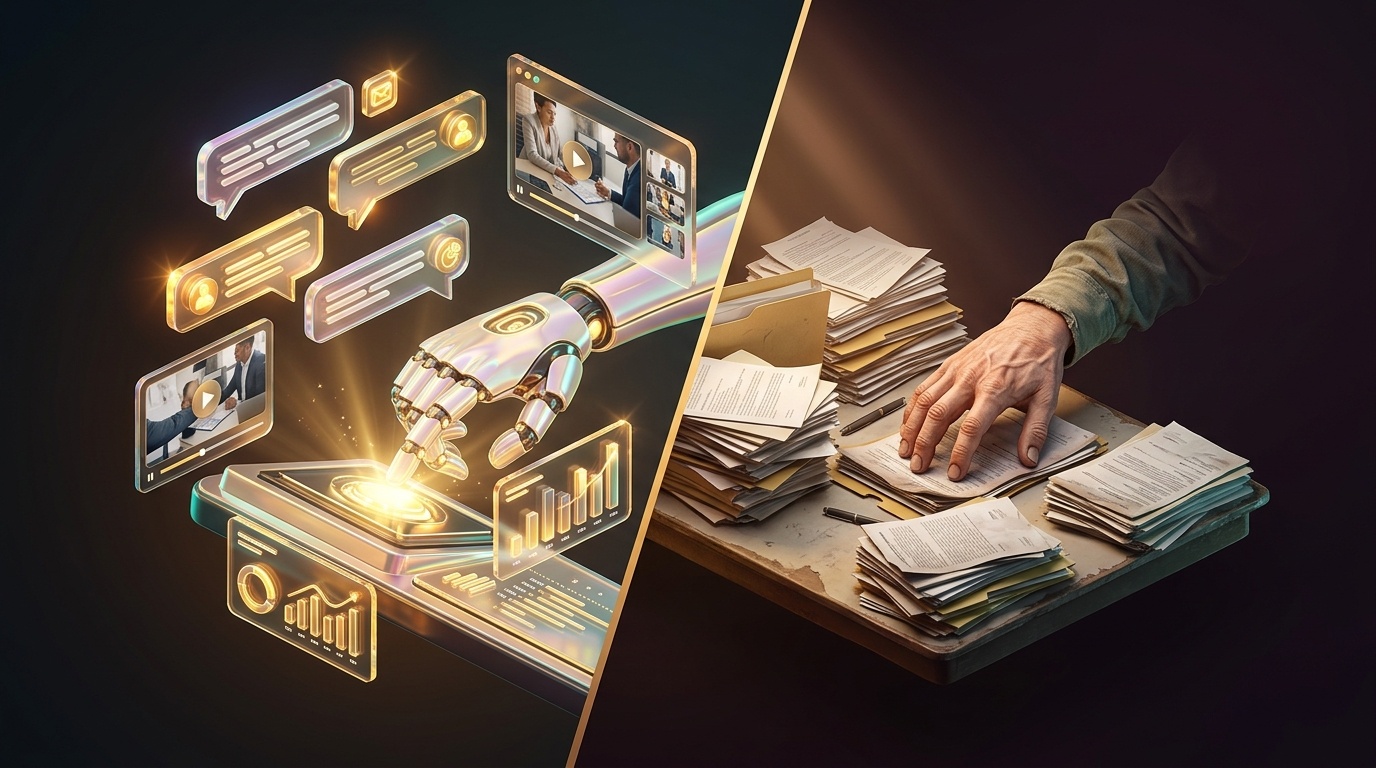
Just a couple of years ago, an "AI for business" meant, at best, a text generator for social media posts. By autumn 2026, the landscape has shifted: AI agents are now handling customer correspondence, aggregating revenue from six different platforms, and deciding exactly who sees an ad. The difference between "using AI" and "delegating to AI" has become tangible—and here are concrete examples where this is already working, not just being promised.
1. AI Agent vs. Live Support Operator
Yandex AI Studio has rolled out a feature for creating AI agents for messengers—Telegram, Max, Yandex Messenger, or website widgets—without needing developers. The agent can parse free-form queries, match them with the appropriate scenario, and explain to the user how to solve their problem. As a result, a portion of inquiries that previously required a human operator due to bot interface limitations can now be handled automatically.
The Takeaway: for small and medium-sized businesses, this is a chance to cover messenger support without hiring a dedicated person for the evening shift—the agent doesn't get tired and doesn't mix up scenarios.
2. Unified Monetization Dashboard vs. Manual Multi-Platform Management
Bloggers and channel owners typically manage separate dashboards for every network, wasting time reconciling income. Yandex has introduced Yandex ProBlogger, a service that consolidates monetization tools for channel and blog creators. Through a single interface, content creators can work with Telegram, MAX, VK, RUTUBE, YouTube, and Dzen. Yandex ProBlogger allows for the integration of multiple earning models: authors can simultaneously receive revenue from automated ad placements based on views and clicks, while also using affiliate links in their own posts.
The Takeaway: instead of six personal dashboards and manual calculations, you get one panel where an integrated AI model handles part of the routine, such as formatting promotional posts.
3. In-Bot Advertising vs. Standard Channel Banners
Advertisers are used to targeting channels, but bot audiences have long remained directly inaccessible. In Telegram Ads, you can now target bot audiences—a new ad format called "Banner in Bot" has appeared, allowing ads to be placed inside Telegram bots. You can configure impressions based on demographics, channel subscriptions, interests, and your own database of phone numbers.
The Takeaway: if your business has a bot assistant or a quiz, this is a new advertising channel that wasn't previously sold separately—it's worth looking into while rates are low due to the format's novelty.
4. Automated Video Clipping vs. Manual Shorts Editing
For bloggers and content creators, the biggest time-sink is turning an hour-long stream or podcast into a dozen vertical clips. The neural network analyzes the material, identifies the most viral fragments, crops them to a 9:16 vertical format, and adds subtitles. The service processes the material in minutes and outputs up to a hundred ready-to-use clips from a single long video.
The Takeaway: the editor is no longer the bottleneck in the content cycle—the task shifts to selecting the best clips and publishing them, rather than manually reframing every single shot.
5. AI Strategist vs. Marketer with an Excel Spreadsheet
Budget allocation between channels has traditionally relied on intuition and weekly reports. Now, algorithms manage budgets, forecast demand, and participate in strategic decisions, rather than just generating text and testing headlines as they did a year ago. According to research cited by OkoCRM, 91% of marketing teams are already using AI, and in the Russian market, the majority of companies are actively implementing AI tools.
The Takeaway: if your budget is still being reallocated manually once a week, you are losing the reaction speed that your competitors have already handed over to algorithms.
6. One Chat vs. Ten Open Tabs
A specific routine is switching between different models for different tasks: one is better at writing text, another at analyzing data, and a third at drawing covers. It is much more convenient when GPT, Claude, and Gemini are available in one window, without a dozen tabs and multiple subscriptions. This isn't a flashy release, but simply a way to save nerves for those who generate content, process customer requests, and assemble visuals for cards or posts every day.
The Takeaway: the choice of tool matters less than the speed of switching between them—and here, the winner is the one who has brought everything into one place.
Conclusion
The general shift of autumn 2026 is simple: AI is ceasing to be a "generation button" and is becoming an agent that sees a task through to the end—answering a client, collecting revenue, clipping video, adjusting budgets. The sooner a business entrusts these routine pieces to neural networks, the more time will remain for what truly requires a human: strategy, meaning, and relationships with the audience.
If you want to try different models for your tasks without switching between services, GEMERA AI offers GPT, Claude, and Gemini for chat, as well as image, video, voiceover, and music generation via a Telegram bot and web dashboard. It’s a convenient opportunity to test which of the approaches in this selection will work for your specific project.