AI Agents vs. Routine Tasks: How Smart Systems Are Transforming Workflows
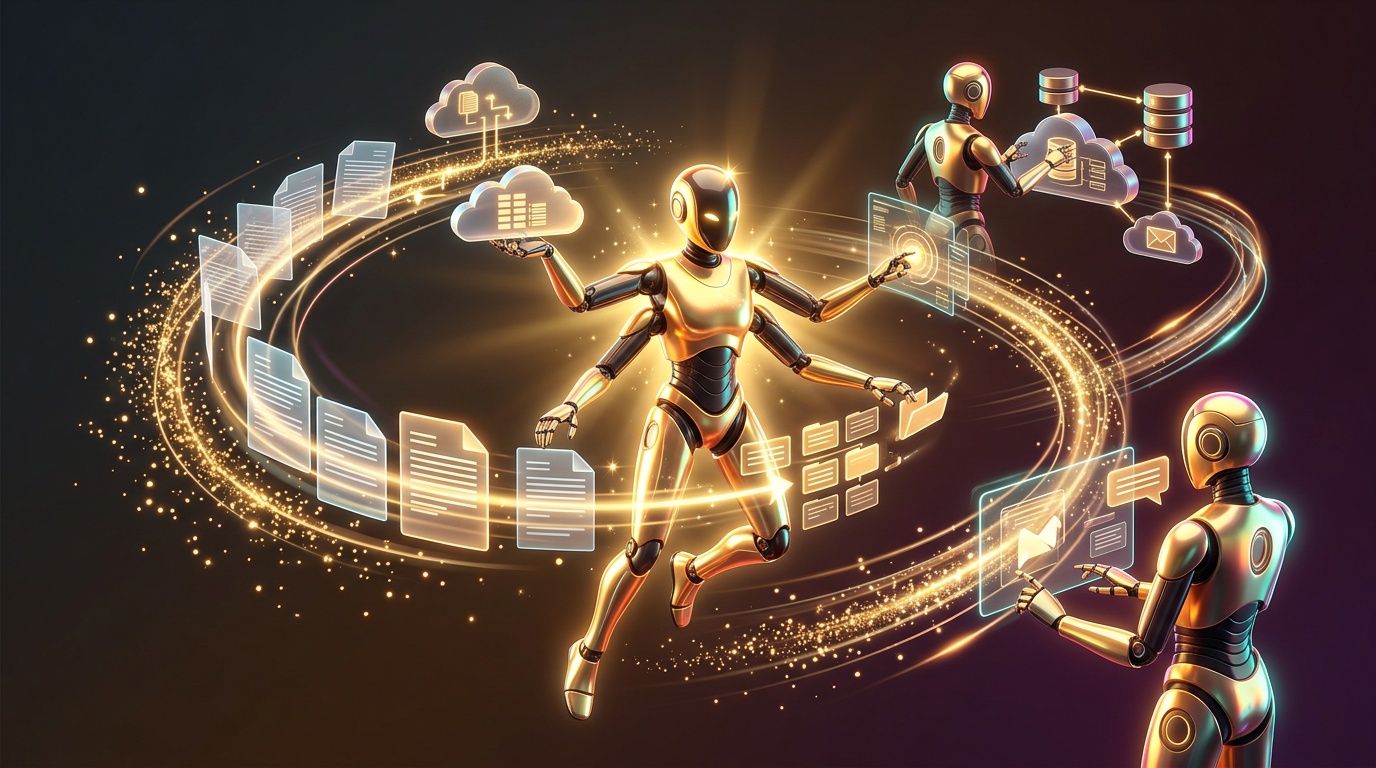
In a world where the flow of information increases every day, managing routine tasks is becoming a serious challenge. AI agents are stepping in to help, becoming increasingly capable of handling repetitive assignments and allowing users to focus on the more creative aspects of their work.
Document Processing: From Routine to Efficiency
Document processing has always been a labor-intensive process. But now, with the development of AI technologies, many companies and individual professionals are entrusting this task to neural networks. Popular AI agents can not only recognize text but also sort, classify, and even analyze the content of documents. This speeds up processing and reduces the likelihood of errors.
Research Without Boundaries
Conducting research is a task that requires concentration and time. AI agents can significantly simplify this process by providing up-to-date information, performing preliminary data analysis, and preparing reports. Such capabilities are especially valuable in the business world, where speed and accuracy are critical.
Automated Responses Are Getting Smarter
AI-powered autoresponders have long been an integral part of communication. They not only save time by answering standard queries but also learn to better understand the context and intent of the user. This means that automated responses are becoming increasingly personalized, which improves the level of customer service.
Benefits and Challenges
Of course, integrating AI agents into the workflow is not without its challenges. It is necessary to consider aspects such as the ethics of data usage and the risk of losing control over processes. However, the benefits in terms of time and resource savings significantly outweigh these downsides.
Try integrating AI capabilities into your work using the GEMERA AI platform to see the effectiveness of these solutions for yourself.