AI Agents vs. Routine: Real-World Business Tasks
A fresh Gartner report on the adoption of agentic AI in companies feels like a cold shower for those expecting miracles from AI agents. Only 17% of organizations have already deployed AI agents, while more than 60% plan to do so within two years—the most aggressive adoption pace among all technologies measured in the survey. And according to Gartner's forecast, more than 40% of agentic projects will be shut down by the end of 2027 due to rising costs, unclear business value, and weak risk control. The gap between expectations and reality is huge—and it is precisely this gap that sustains the most persistent myths about AI agents. We break down four such misconceptions and look at what actually works today: document processing, research, and draft client responses.
A separate figure worth noting is what Gartner calls "agent washing": out of thousands of vendors marketing themselves as agentic AI, only about 130 are truly agentic products, while the rest are just chatbots and RPA solutions with a new label. It is important to keep this in mind when choosing an automation service: not everything called an "agent" is actually capable of planning and executing multi-step tasks without your intervention at every step.
What you can actually delegate to AI entirely
Despite analyst skepticism, there is a category of tasks where AI agents are already coping without constant human supervision:
- Data extraction from documents. Recognizing and structuring information from invoices, waybills, and contracts is a task where a neural network works stably and quickly, and a human only verifies the final figure rather than entering it manually.
- Research and summaries of lengthy texts. If you upload several dozen pages of financial reports to a neural network, it will highlight key indicators, point out risks, and prepare a short summary for management—just as lawyers, analysts, and consultants do when they feed lengthy contracts and regulations into Claude.
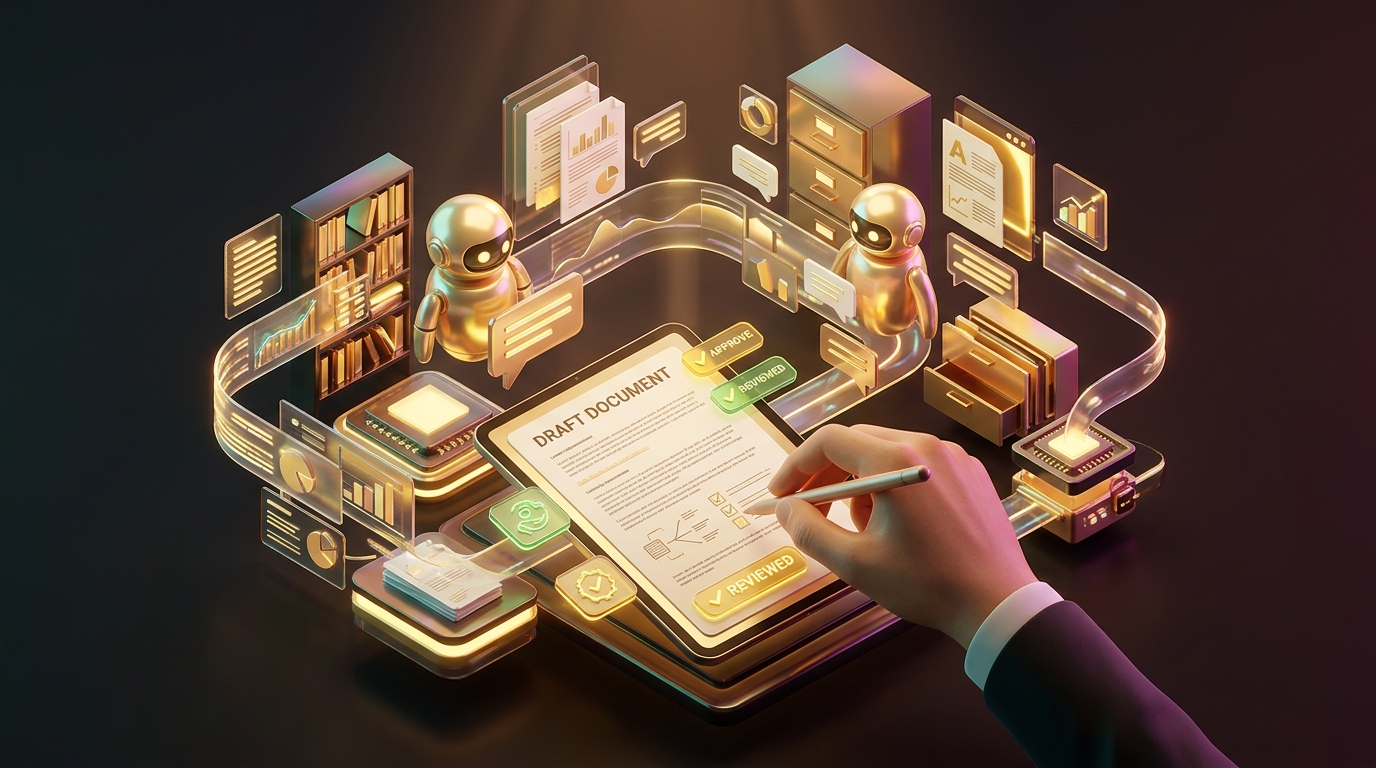
- Drafting client responses. An agent can compile the correspondence history, formulate a response in the appropriate tone, and prepare it for sending—the final decision to "send" still remains with the human.
The general principle is simple: agents excel at tasks with a clear structure and a predictable outcome. The more ambiguous the task and the higher the cost of an error, the more control you should retain.
Myth 1. You can turn an agent on and forget about it
The most popular misconception is that implementing an agent means full autonomy: set it up, configure it, and it works on its own. In practice, this illusion kills the most projects. Three reasons Gartner cites as the main culprits for canceling agentic projects are rising costs, unclear business value, and weak risk control, not poor model quality.
A telling example is the recent launch of RealAssist AI by Realtor.com for real estate agents: the agent prepares draft messages to clients and clarifies search parameters, but the agent verifies and approves every action before it is executed. The developers consciously kept the realtor "in the driver's seat"—and this is not a flaw, but the correct architecture: the higher the stakes in the correspondence (price, deal terms), the more important human verification is before sending.
Myth 2. The more agents, the faster the result
Stories about "swarms" of hundreds or thousands of agents working together to solve a complex task sound impressive, but they are far from suitable for every routine. Such systems perform well on clearly formalized engineering tasks with measurable results—but you cannot automatically transfer this scheme to a company's chaotic internal processes.
Here, it is worth recalling "agent washing": Gartner estimates that among thousands of vendors, only about 130 are truly agentic products, while the rest are repackaged chatbots and RPA without a real ability to plan multi-step actions. Before implementation, it is worth honestly checking whether the chosen service can independently break a task into steps and connect the necessary tools, or if it simply answers questions under a new label.
Myth 3. An AI agent will clean up your processes on its own
The expectation that an agent will automatically fix a chaotic, poorly described process is not justified. As market experts note, an agent will not fix chaos—it will start reproducing it quickly and stably, so you need to formalize the process before automation, not instead of it. This also applies to document processing: if a company does not have a unified contract template or a clear approval regulation, an agent will simply accelerate the creation of confusion rather than resolve it.
Myth 4. Agent auto-replies can be sent without verification
The temptation to fully delegate client correspondence is great, but even services built specifically for auto-replies consciously leave a confirmation step. In the example of an agent for reviewing contracts, the logic is similar: the AI reads the document, compares the terms with company policies, and flags dangerous clauses or missing details, but the final decision and signature remain with the lawyer, not the tool.
Practical conclusion: for low-risk, standard responses (confirming an application, clarifying order status), you can gradually reduce the level of verification. But for anything involving price, deal terms, or legal wording, a manual approval step should always be kept.
What to do right now
If you want to connect AI agents to your routine without falling into that 40% of canceled projects, it makes sense to move in stages:
- Start with narrow, measurable tasks—extracting data from documents, summaries of long texts, drafts of standard responses.
- Formalize the process on paper first, and only then automate it.
- Keep a manual confirmation step for anything related to money, obligations, or sending messages to clients.
- Verify the tool for true agency rather than trusting only the marketing label.
You can try this approach in practice without complex corporate infrastructure. GEMERA AI offers GPT, Claude, and Gemini in one chat and Telegram bot—convenient for draft summaries of documents, quick research, and response sketches that you only need to verify and send.