Imagen vs. Nano Banana: Google's New Image Generation Race
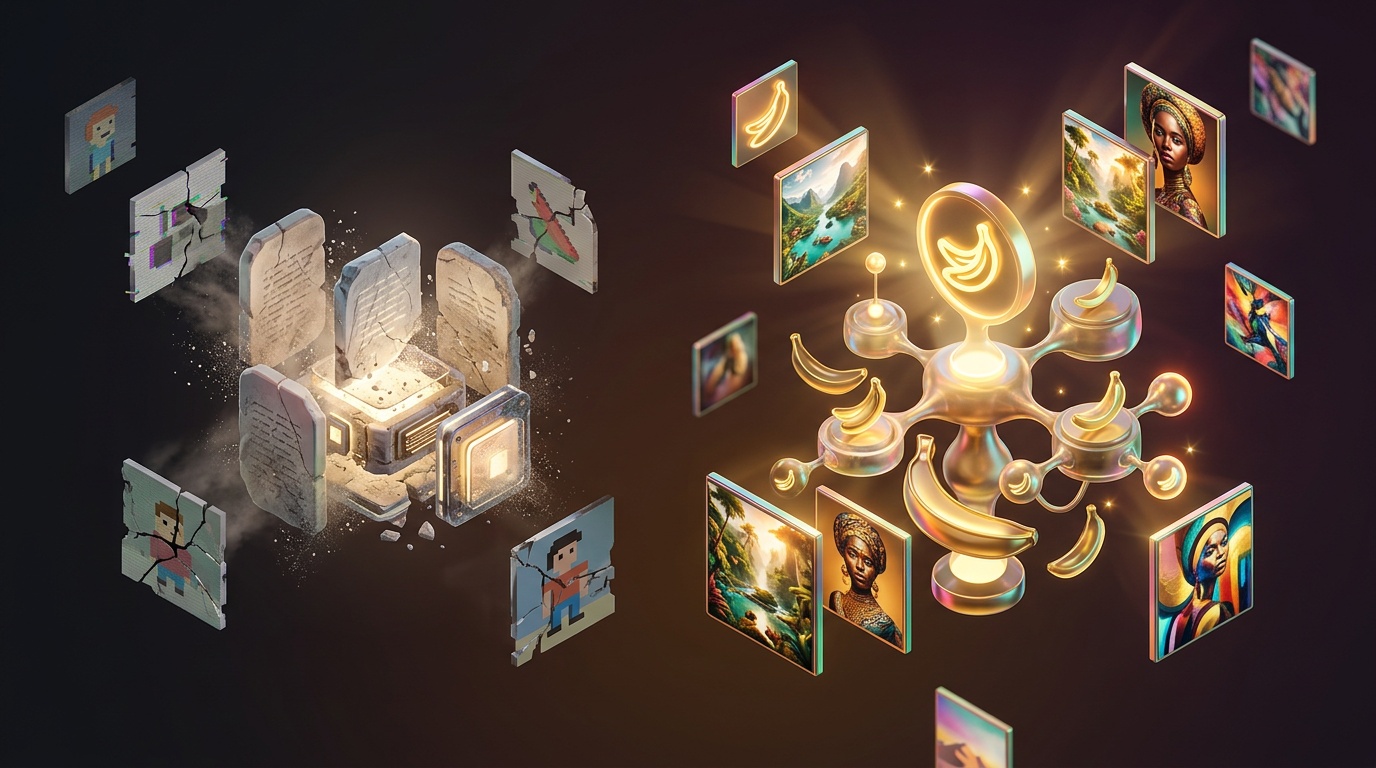
If you have been using Google Imagen via API or Vertex AI, I have some news for you. Google is officially shutting down this model and moving everyone to a new lineup with the quirky name Nano Banana. This isn't a rumor or a future forecast—the deadline arrived just the other day. Let's break down what happened, why it came to this, and what those who were accustomed to Imagen should do now.
What happened to Imagen
It didn't start yesterday. Back in March 2026, Google deprecated Imagen on Vertex AI, and now the end has arrived. This applies not only to the fourth version.
Google's official documentation explicitly names the replacement. In other words, Google didn't just release another update—it effectively collapsed a separate line of text-to-image models and moved all image generation into Gemini.
Why Imagen was good—and why it's leaving anyway
It's a shame, because Imagen 4 was a perfectly capable model. Three pricing tiers—Fast, Standard, and Ultra—covered various tasks, from quick sketches to final client-ready images. The model made significant strides in handling text within images.
Technical details worth noting include:
- All images were marked with an invisible watermark.
- The model was capable of working in various artistic styles.
However, a separate model line had a systemic flaw: it lived outside the conversational interface. You would write a prompt, get an image, and that was it—with no way to immediately say, "now fix the lighting on the left" in the same window. This is precisely the gap that Nano Banana closes.
Why Google is betting on Nano Banana
Nano Banana is not a separate product, but a nickname for the Gemini Image family of models that are built directly into the chat. The difference is fundamental.
As of today, there are effectively two working options in the lineup. This is the exact path where former Imagen users are migrating. And for complex tasks, there is the big brother.
Nano Banana wins significantly where Imagen had weaknesses:
- Preserving faces and characters. This is why neural networks are chosen for serial illustrations and branding.
- Text on images in different languages.
- Working with real-world facts.
What this means for you
If you never worked with Imagen directly via API and simply generated images in Gemini, Google AI Studio, or through a third-party service, you are likely already on the new models and won't notice a thing. The issue primarily affects developers and companies that hardcoded specific Imagen model IDs into their products: they will need to rewrite their code and test the results on the new endpoints.
For everyone else, this is good news. Instead of fragmented text-to-image models with different interfaces, Google is consolidating everything into a single conversational tool that can simultaneously generate from scratch, edit existing photos, maintain character consistency between frames, and insert verified facts into images. In essence, Google has acknowledged that the future is not in a separate "generate image" button, but in a model that understands the context of the entire conversation.
Conclusion
The story of Imagen's closure is a good lesson for everyone building workflows around specific neural networks: models change, and sometimes disappear entirely, giving way to more flexible solutions. Nano Banana and Nano Banana Pro now cover almost the entire spectrum of tasks that Imagen previously handled—and they do it more conveniently, thanks to conversational editing and the ability to work with facts from the internet.
At GEMERA AI, Google's new models are already available—you can try image generation and editing via Nano Banana directly in our Telegram bot or web dashboard, without having to deal with APIs and migrations. You can also compare them with other image models and choose the one that best suits your specific tasks.