How AI Is Turning Photographers into Art Directors: From Retouching to Concept Art
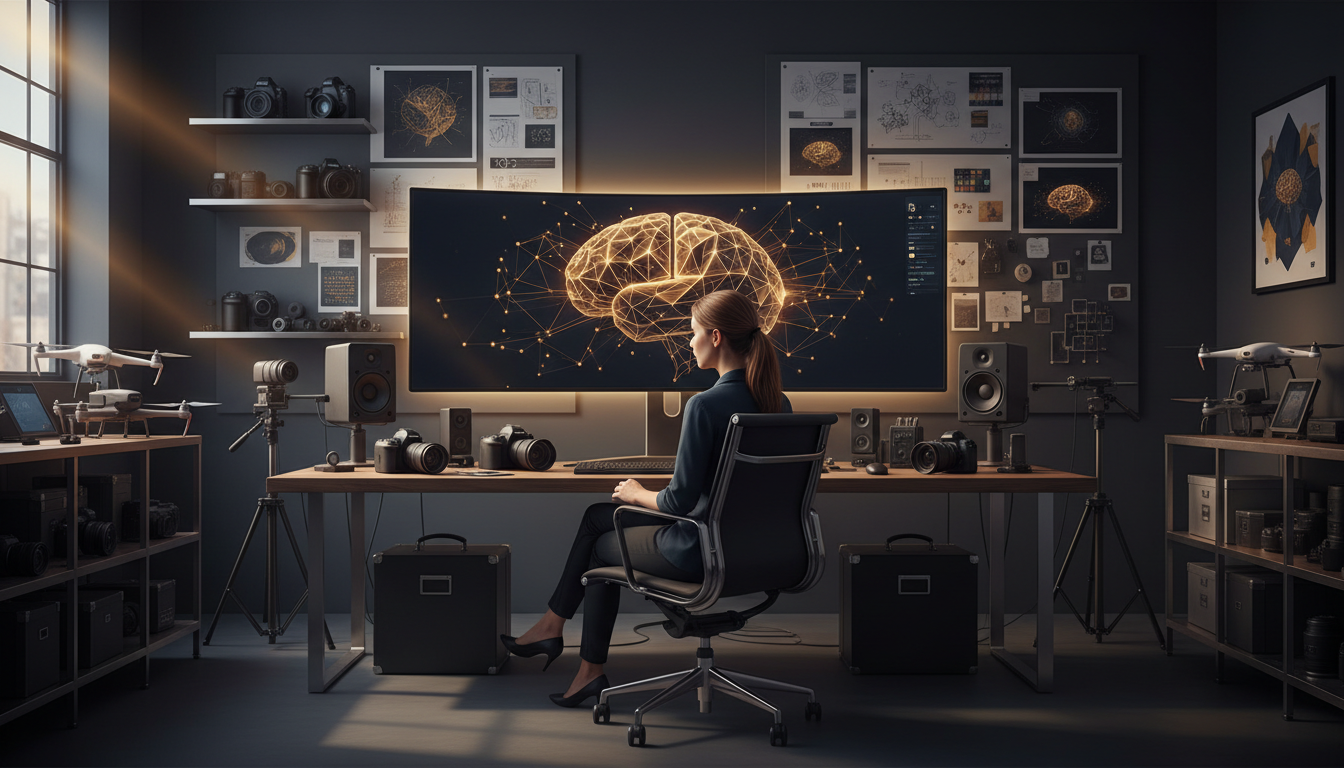
Just three years ago, photographers spent up to half their working time on post-processing: tone leveling, object removal, and color correction. Today, AI handles these tasks in minutes. Most importantly, neural networks have given photographers access to tools that previously required a team of designers and 3D artists. Let's break down how the profession is changing and what opportunities this creates.
Automatic Retouching and Image Restoration
Models like Kandinsky 6.0 and Adobe Firefly can restore details in old or damaged photos, remove noise, correct color, and even fill in missing fragments. The photographer uploads the source file, describes the task, and receives the finished result in a couple of minutes without manual layer masking.
This is especially valuable in commercial photography: if a client wants to remove wires, replace a background, or adjust lighting, what used to take an hour of work in Photoshop now only requires a text prompt.
Generating References and Concept Art Before a Shoot
Neural networks allow photographers to create visual sketches of a future shoot: selecting composition, lighting, and mood. Instead of explaining an idea to a client in words or searching for similar work online, you can generate a series of concept art pieces in ten minutes and agree on the direction.
This changes the photographer's role: they become the art director of their own project. AI handles the visualization of the idea, while the human focuses on directing, working with light, and posing models.
Expanding the Frame and Changing Perspectives
Modern generators can fill in the space beyond the edges of a frame—a process known as outpainting. If a shot lacks space on the left or right, the model will build out the background while maintaining the style and lighting. This is useful for adapting vertical shots to horizontal formats or creating panoramas from single frames.
Some tools allow you to change the shooting angle: turning a frontal portrait into a three-quarter view or shifting the viewpoint. Previously, this required a reshoot or complex 3D reconstruction; now, it takes one prompt.
Stylization and Creative Effects
AI provides access to artistic styles that previously required manual processing or plugins. A photographer can turn a shot into a watercolor sketch, a cyberpunk poster, or vintage film while keeping the subject recognizable.
Important: a neural network does not replace the author's vision. It performs the technical part, freeing up time for experiments with composition, light, and narrative. The photographer remains the director of the shot—AI simply expands the palette of tools.
Practical Use Cases
- Commercial photography: fast retouching, background replacement, and adapting shots for various social media formats.
- Wedding and event photography: automatic color correction for series, removing unwanted objects, and restoring overexposed areas.
- Portfolio and creative projects: generating concept art, stylization, and creating series with a unified visual language.
- Archival work: restoring old photos, colorizing black-and-white images, and repairing damaged frames.
What This Means for the Profession
AI is not replacing photographers—it is shifting the focus from technical processing to creative direction. Photographers gain more time to work with clients, find ideas, and experiment with composition. Routine tasks are automated, and value lies in the ability to see the shot, set the light, and tell a story.
Those who master neural networks as a tool will be able to offer clients a wider range of services: from classic photography to concept art and visual project development. This is a new niche at the intersection of photography, design, and art direction.
Want to try image generation, stylization, and retouching with AI? GEMERA AI offers leading models for visual work—from quick edits to creating concept art. Everything is in one dashboard, without switching between services.