How Neural Networks Make Mistakes and What to Do About It: An Honest Look
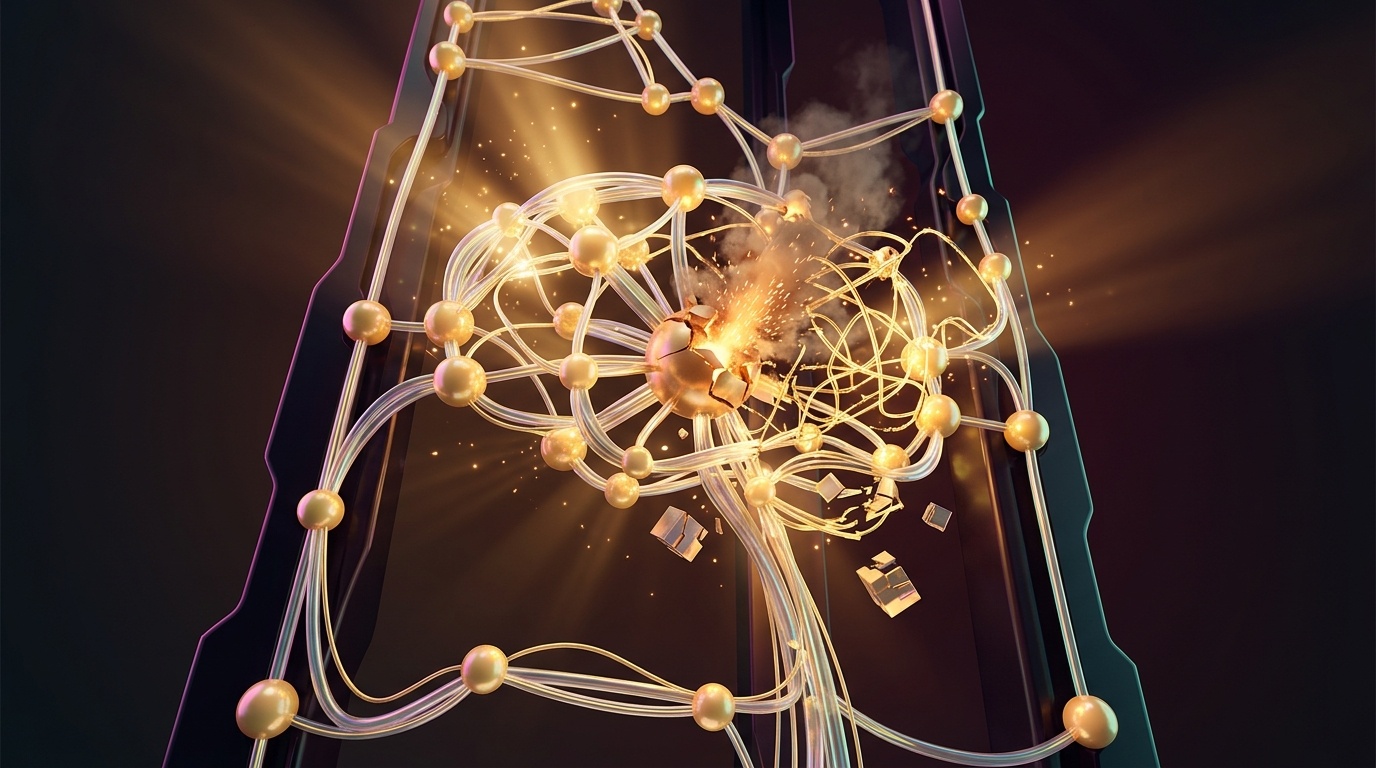
Neural networks, like humans, can make mistakes. And while they haven't learned to blush with shame yet, we are trying to understand why this happens and how to turn these blunders to our advantage. Let's break down the weaknesses of AI and how to account for them in your work.
Why does AI make mistakes?
There are several reasons why neural networks may provide incorrect answers. These include under-training, limited and sometimes erroneous input data, as well as the inherent nature of models that select words based on the probability of their sequence.
Often, a neural network can "hallucinate"—a situation where it produces absurd and completely implausible results. Such errors often arise from overfitting, where the model becomes too fixated on a single topic and is unable to look beyond it.
How neural networks "stumble" in different fields
In mathematics and the exact sciences, AI is usually more precise, which is due to the clarity of formulations and strict algorithms. However, ask a question about history or philosophy, and the neural network may get confused, providing vague or contradictory answers.
For example, when answering a question about the Russian Civil War, a neural network might provide not one, but several conflicting opinions, as it is trained on texts containing different points of view. As a result, its answer will be merely a compilation of data, not carrying a single truth.
Workarounds: how to deal with AI errors
Fortunately, there are methods that can help reduce the risks of receiving incorrect information:
- Detailed prompting: the more conditions and details you specify, the more accurate the answer will be. Don't just say "tell me about summer," but "a sixth-grader's memories of summer camp."
- Cross-checking: use the method of repeating queries and compare results across different neural networks—this will help identify inaccuracies.
- Regular updates: working with the most recent versions of models often helps avoid old errors and hallucinations.
Conclusion
Neural networks are an excellent tool if you know how to handle them properly. You shouldn't rely on them blindly, but you don't need to fear them either. The main task is to learn how to formulate queries correctly and double-check the results, making them your allies in your work.
Try evaluating the capabilities and limitations of the models available through GEMERA AI for yourself, and may your work with AI be more productive and efficient.