How Neural Networks Make Mistakes and What to Do About It: A Practical Guide
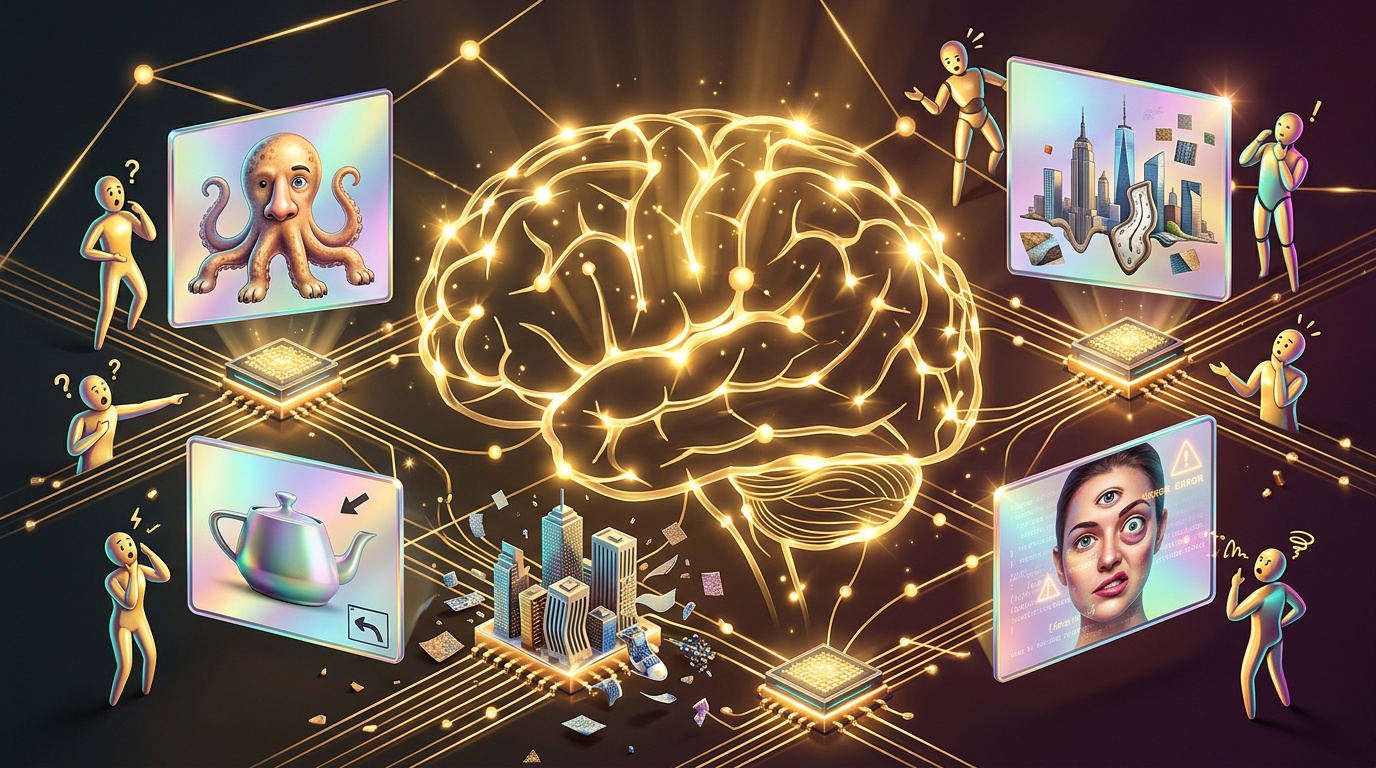
Everyone is talking about artificial intelligence as if it were a magic wand capable of solving every problem. But those who have already tried it know: neural networks can make mistakes too. Let's break down where they slip up and how to work around it.
Common Neural Network Errors
The main problem users face is what are known as neural network hallucinations. This is when you expect one thing, but the neural network offers something completely different. For example, when generating images, it is not uncommon to see curious cases where a character suddenly sprouts a third leg or a sixth finger [behance.net].
As for text generation, errors here are often linked to a lack of precision when answering complex philosophical or historical questions [practicum.yandex.ru]. Neural networks can handle summarizing well-known information perfectly, but when asked to evaluate ethical issues, they often start providing vague answers.
Why Does This Happen?
Errors arise due to the specific nature of how neural networks are trained. They are trained on massive datasets, and these datasets often contain errors or inaccurate facts. Neural networks learn by identifying patterns, but they cannot always grasp context the way a human can [smyslokod.ru].
How to Reduce Errors?
One of the simplest solutions is detailed prompt engineering. The more information you provide to the neural network, the more accurate the result will be [midjourney].
It is also worth using different neural networks for comparison. The same prompt can be tested in various systems, such as ChatGPT or the Alice neural network, and the results can be compared [practicum.yandex.ru].
To reduce errors in graphic tasks, you can use negative prompts, which means specifying exactly what you do not want to see in the result. This method helps avoid common errors, such as extra limbs or incorrect proportions [midjourney].
Conclusion
Although neural networks are not perfect, they remain a powerful tool for many tasks. The key is to learn how to formulate requests correctly and use multiple approaches for verification. Try experimenting with models in GEMERA AI to see this for yourself in practice.