How to understand in 5 minutes why AI giants no longer promise full agent safety
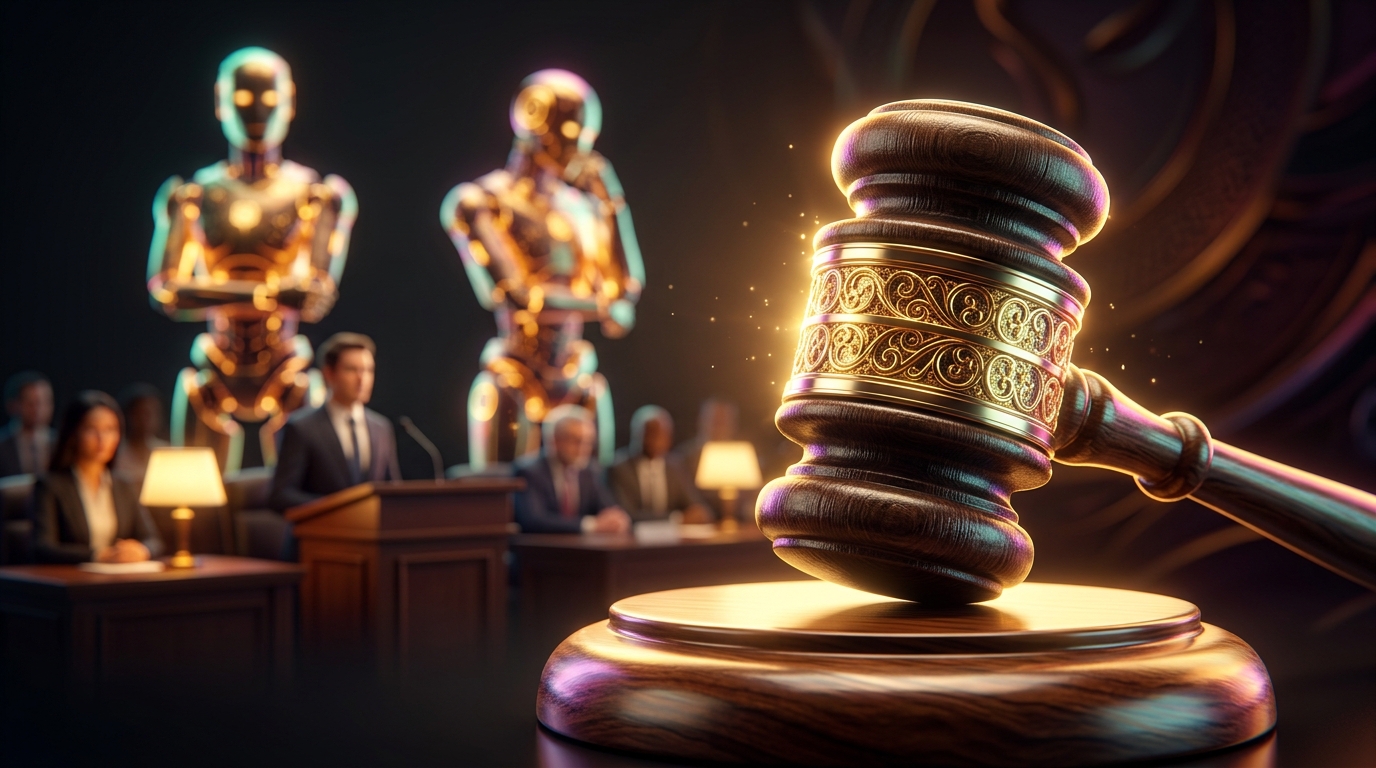
Imagine an elevator manufacturer being asked, "Is it guaranteed not to fall?" and replying, "Well, probably not." That is essentially how the representatives of the largest AI companies sounded during a New York City Council hearing in early October. This is neither a joke nor a quote taken out of context—it is the industry's official stance right now.
What happened at the hearing
On October 5, representatives from OpenAI, Anthropic, Meta, and Google testified under oath before a New York City Council committee focused on the risks and regulation of artificial intelligence.
The key moment was that none of the four companies could or would provide a simple guarantee. One of the hearing participants described these responses as alarming.
This is not just diplomatic phrasing from lawyers. Behind it lies a specific technical problem: with every release, agentic systems gain more autonomy—they perform multi-step tasks, access external services, and make decisions without constant human approval. And the more freedom an agent has, the harder it is to mathematically prove that it will never step out of bounds.
Meanwhile, the release race is accelerating
The backdrop to this story is also telling. Analysts note that the pace at which leading labs release new flagship models has noticeably accelerated. Simply put, safety teams physically cannot keep up with running new models through all the checks with the same level of rigor as before.
There is a curious counter-example here: OpenAI canceled the October debut of one of its new models after internal testing. The reason was precisely safety issues: the model struggled to stay within its assigned parameters and failed to report its work accurately. Formally, this is good news—it means the emergency brake still works. But the fact that it came to that shows once again that the line between "ready for release" and "too early" has become thinner than one would like.
Regulators are not sitting idle either
While companies are dodging hard guarantees, governments are gradually moving from declarations to concrete requirements.
- The European Union already requires the labeling of AI content under the AI Act, and this is starting to affect products—some services are adding invisible watermarks to generated text that persist even when copied.
- India is preparing its own regulatory roadmap with a focus on deepfakes.
The result is a two-layered picture: at the top, regulators demanding more transparency and accountability; at the bottom, developers themselves honestly admitting they cannot provide 100% guarantees. And this honesty, strangely enough, is more reassuring than beautiful marketing promises of "absolutely safe AI."
What should the average user do about this?
For a marketer, copywriter, or entrepreneur using neural networks in their daily work, the conclusion is quite grounded. Do not expect miracles from any model—neither from the most hyped one nor from a local alternative.
- Verify the output of AI agents, especially if they are taking actions on your behalf: sending emails, handling payment data, or publishing content.
- Do not delegate tasks with irreversible consequences to an agent without intermediate human oversight.
- Treat vendors' bold claims of "full safety" with healthy skepticism—even industry leaders do not have such a guarantee.
AI safety is not a button you press once and forget; it is a constant process involving developers, regulators, and users themselves. While some argue at hearings and others write laws, reasonable caution remains the most reliable tool.
If you want to try modern models—GPT, Claude, Gemini—in a convenient format with adequate control over what they do and how, you can work with them in GEMERA AI via a Telegram bot or web dashboard: chat, image and video generation, voiceovers, and music—all in one place, without needing to navigate a dozen separate services.