Context Engineering: Why Prompts Are No Longer the Primary Tool for AI Interaction
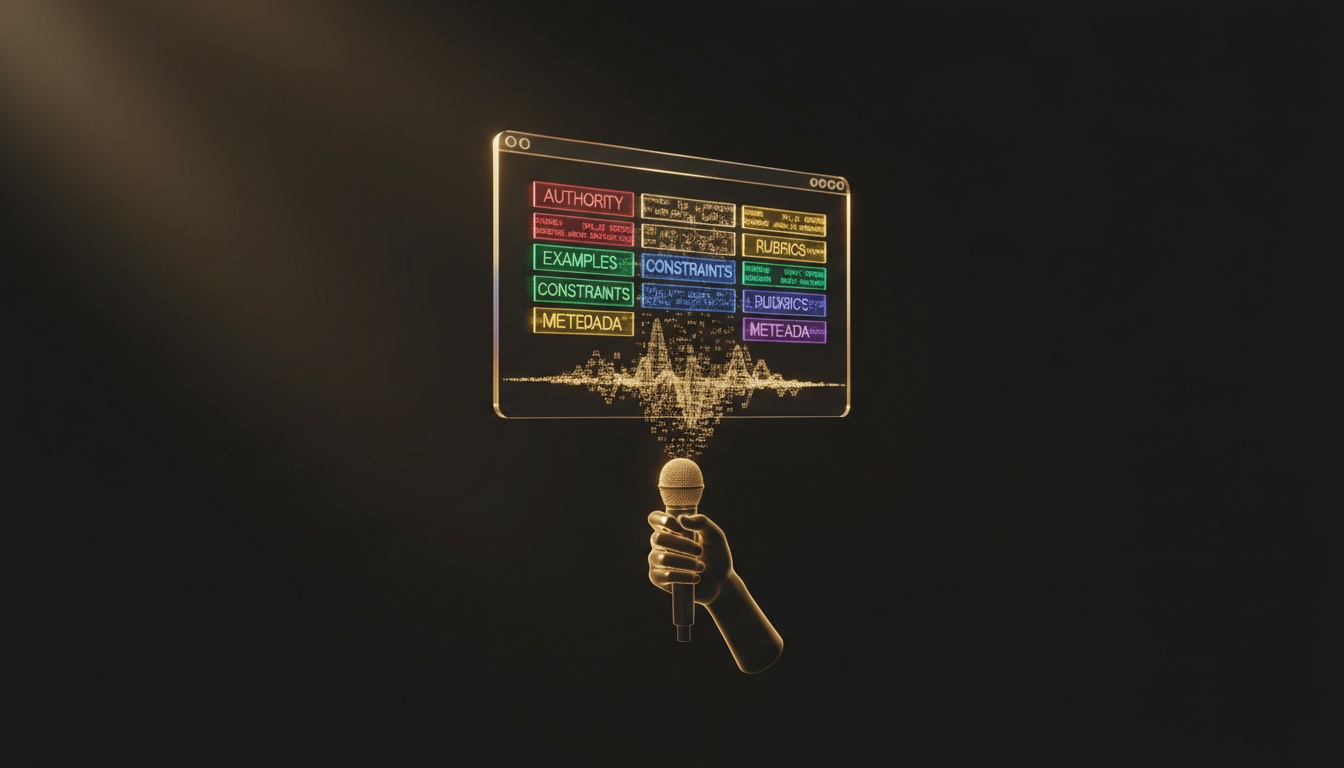
The term "prompt engineering" is rapidly losing its relevance. In June 2025, Andrej Karpathy, co-founder of OpenAI, suggested replacing it with "context engineering," and by early 2026, the new terminology had become an industry standard. Anthropic released its own guide to context engineering, IBM and LangChain incorporated the term into their documentation, and the Russian developer community caught onto the trend by May.
The essence is simple: as model context windows have grown from 4,000 to a million tokens, the challenge has shifted from how to phrase a question to how to manage the entire contents of the window. The prompt has become just one of five to seven slots that need to be filled correctly.
The Five Roles of a Context Package
The industry has converged on a unified structure for a context package, described by five roles:
- Authority — who is acting, their role, and their competencies. This is the system prompt that defines the model's behavior.
- Exemplar — one or more examples of the desired result. The model learns from specific samples rather than abstract instructions.
- Constraint — limitations that cannot be violated. Output format, prohibited actions, and technical requirements.
- Rubric — success criteria by which the agent evaluates its own work. A quality checklist embedded in the context.
- Metadata — uploaded files, system state, and history of previous steps.
In practice, with tools like Cursor or Claude Code, half of these slots are filled automatically—the IDE loads open files and the system prompt. However, the Exemplar, Constraint, and Rubric must be written by the developer, and these three blocks account for 70–80 percent of the entire package's volume.
Why Voice Has Become the Primary Interface
A context package for a real-world task is 1,000–1,500 words. An experienced developer types 38–40 words per minute, meaning a full package takes 35–40 minutes. Natural dictation yields 130–150 words per minute—the same volume is completed in 10 minutes.
The math is simple, but the effect is deeper. Speech flows more coherently, without searching for phrasing or stopping for typos. Voice is the only interface with a realistic throughput of thousands of words per day that doesn't turn work into a physical strain on the hands.
A typical workflow looks like this: pre-prepared Authority and Constraint blocks are loaded via snippets or auto-replacements, while the variable parts—Exemplar and Rubric—are dictated by voice, after which the entire package is run through an AI cleanup. The model removes filler words, formats the structure, and returns a ready-to-use context package. The full cycle takes 5–8 minutes instead of half an hour.
The Magic of Nonsense: When Abracadabra Works Better Than Instructions
In parallel with the shift to context engineering, researchers have discovered a paradox: prompts filled with a chaotic set of letters and numbers sometimes work better than carefully crafted instructions. A group of scientists tested the methodology on four models—ranging from 0.8 to 27 billion parameters. It turned out that "abracadabra prompts," where up to 90 percent of the text consists of a random set of characters, can increase model accuracy by several percentage points.
The explanation is simple: the prompt hits the right spot in the model's latent space, activating the exact weights responsible for the desired behavior. At the same time, these discovered "spells" are strictly individual—a prompt that works on one model is almost useless on another. The only notable exception is related mathematical tests, between which prompts retain some of their effectiveness.
The practical value of this discovery is that optimized nonsense prompts are, on average, three times shorter than classic instructions, saving tokens on every request. The effect lies not in verbosity, but in hitting the right lever precisely.
How to Start Practicing Context Engineering
Transitioning to context engineering does not require changing tools—it is enough to change your approach to working with the model. Four basic steps:
- Create a context package template—a markdown file with five sections: role, example, constraints, criteria, and metadata.
- Save standard blocks—Authority for backend, frontend, analytics, and standard Constraints—as auto-replacements or snippets.
- Dictate variable parts—Exemplar, Rubric, and task description—by voice, or type them if the volume is small.
- Before sending to the agent, run the dictated text through an AI cleanup—using a built-in command in your voice tool or a manual prompt in Claude or ChatGPT.
The result is a prompt that can be reused, compared for quality, and improved through versioning. Humans stop arguing with the model based on intuition and start training the operational loop through iterations.
Try Context Engineering in GEMERA AI
All the models discussed in this article—GPT, Claude, Gemini—are available in GEMERA AI through a unified interface. You can assemble a context package using the five roles, test it on different models, and compare the results. The Telegram bot and web dashboard support long contexts, save session history, and allow you to switch between models within a single conversation. Try context engineering in practice—and see how much the quality of responses changes.