Can you trust a digital twin instead of a live speaker for your sales videos?
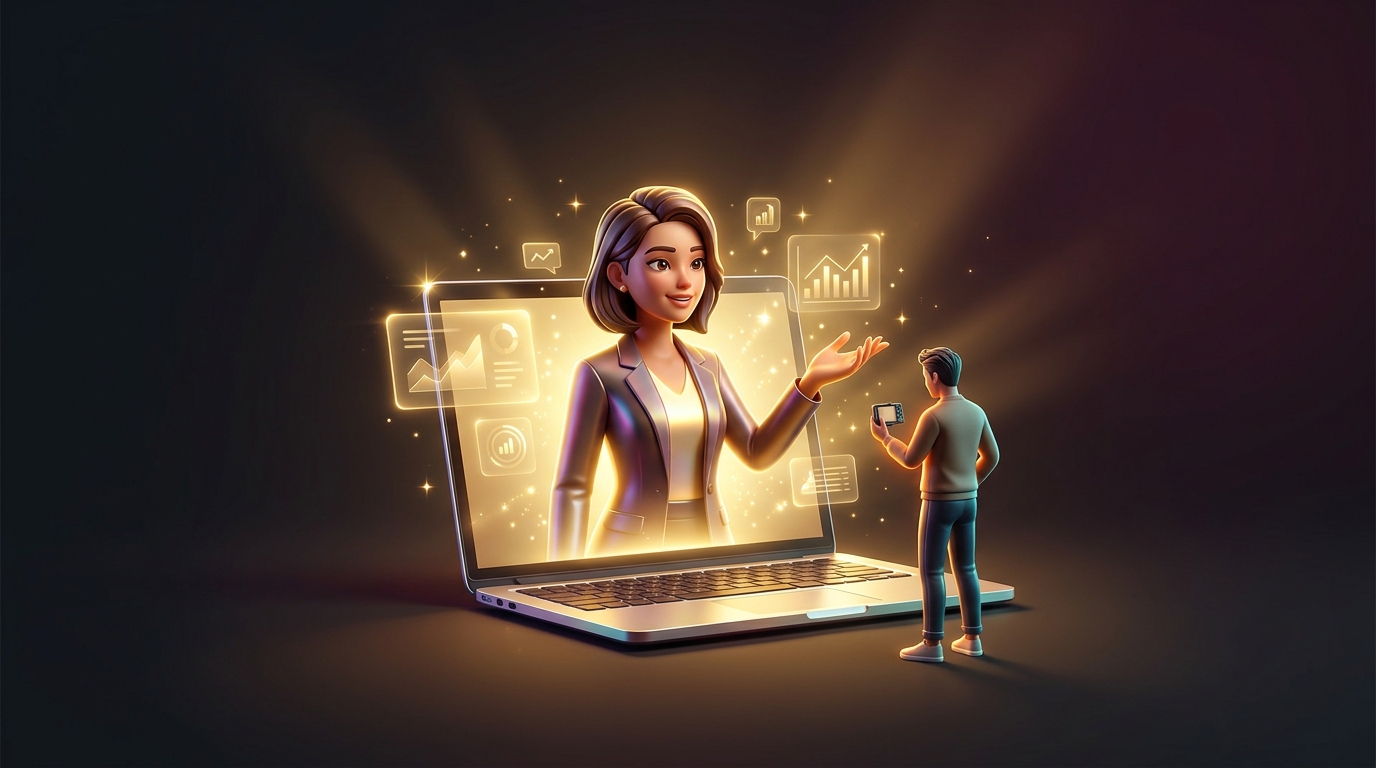
Imagine this: you need to record your tenth training video of the week, but you just don't want to turn on the camera—your voice is fading, the lighting is off, and you're short on time. This is the exact pain point that AI avatars have been solving in recent months: a digital copy of a person that speaks the text you simply type into an input field. And judging by HeyGen's latest product updates, this is no longer just a toy for conference demos, but a functional tool for marketers, salespeople, and content creators.
A digital twin that learns in 15 seconds
Between spring and autumn 2026, HeyGen rolled out the Avatar V model—its most accurate avatar to date. To create a digital copy, all you need is a short reference video and a separate consent verification step — the model memorizes the specific person's facial expressions, gestures, and manner of speaking, rather than just mapping a voice onto a static photo. Training input: A 15-second reference video plus a separate consent step. After that, the avatar can be placed into different scenes, with changing backgrounds and outfits—it captures movement, gestures, and natural expressiveness from the short reference video, then allows you to apply all of that to any photo. The outfit, setting, or angle changes, but the movement remains unmistakably recognizable.
It sounds like science fiction, but the model is specifically tailored for professional scenarios rather than entertainment content. It is a model within the broader HeyGen video platform, designed for people who want to consistently appear in training, marketing, sales, localization, expert, or social videos without having to reshoot every version.
Where this actually works for business
The practice is already well-established, and it’s not just about the hype. Here are the main scenarios encountered by real companies and solopreneurs:
- Personalized sales videos. The sales department generates dozens of video variations for different customer segments—mentioning names and specific pain points instead of using generic templates.
- Training and onboarding. The same module is recorded once and distributed across regions in different languages while maintaining lip-sync.
- Personal brand without a camera. Experts who are uncomfortable or too busy to film regularly can continue to publish content under their own name.
A telling case study is that of a mortgage broker who was camera-shy and only posted videos once every three weeks. After switching to a digital twin, he increased his posting frequency from one video every three weeks to three videos per week. The result wasn't just about quantity: one of his educational videos reached about 13,700 views, with 30% of viewers staying engaged for about 22 seconds. Importantly, the audience expanded rather than just 'churning' among old subscribers.
At the business level, the logic is the same: marketing and training teams gain the ability to create localized product videos, produce educational content without needing a studio schedule, and prepare personalized messages for the sales department—all without the constant need for studio rentals or filming schedules.
The September update isn't just for enterprises
In September 2026, HeyGen took a step toward developers and agencies, not just large brands. The company released an open stack for real-time avatars based on GPT-Live-1, launched the Code2Video benchmark to evaluate AI-generated animation, and added professional voice cloning to its API. For a small team, this means that avatar videos can be embedded directly into their own service or automated email sequences, rather than just manually assembling clips in a web interface—integrations already exist with n8n and other no-code tools.
What remains your responsibility
For all its efficiency, the technology does not absolve you of responsibility for audience trust. The rule is simple: create an avatar only with your own face or with the person's consent—you cannot pass off someone else's face as your own. This is not a formality, but the foundation of long-term relationships with subscribers and clients: as soon as the audience senses a deception without an explanation, trust drops faster than it grew.
Also, keep in mind that an avatar is a tool for repeatable, structured content: training, localization, and sales templates. For spontaneous niche humor or live improvisation, it is not yet a replacement for a personal presence.
What to do about it right now
You don't have to implement a digital twin immediately to feel the benefits of AI video. To start, you can:
- Test text-to-video generation with a small clip—for example, a product announcement or a short service explanation.
- Add voiceover in the required language instead of recording a voice from scratch.
- See how much faster your content plan comes together if some videos don't require turning on the camera.
If you want to try video, image, and voice generation without dealing with separate services and subscriptions, GEMERA AI has it all in one place: a Telegram chatbot and a web dashboard provide access to the latest models for images, video, music, and voice. You can start with a simple scenario—and then decide how deeply a digital twin fits into your specific workflow.