Programmers with 15 years of experience are flocking to content factories: a trend analysis
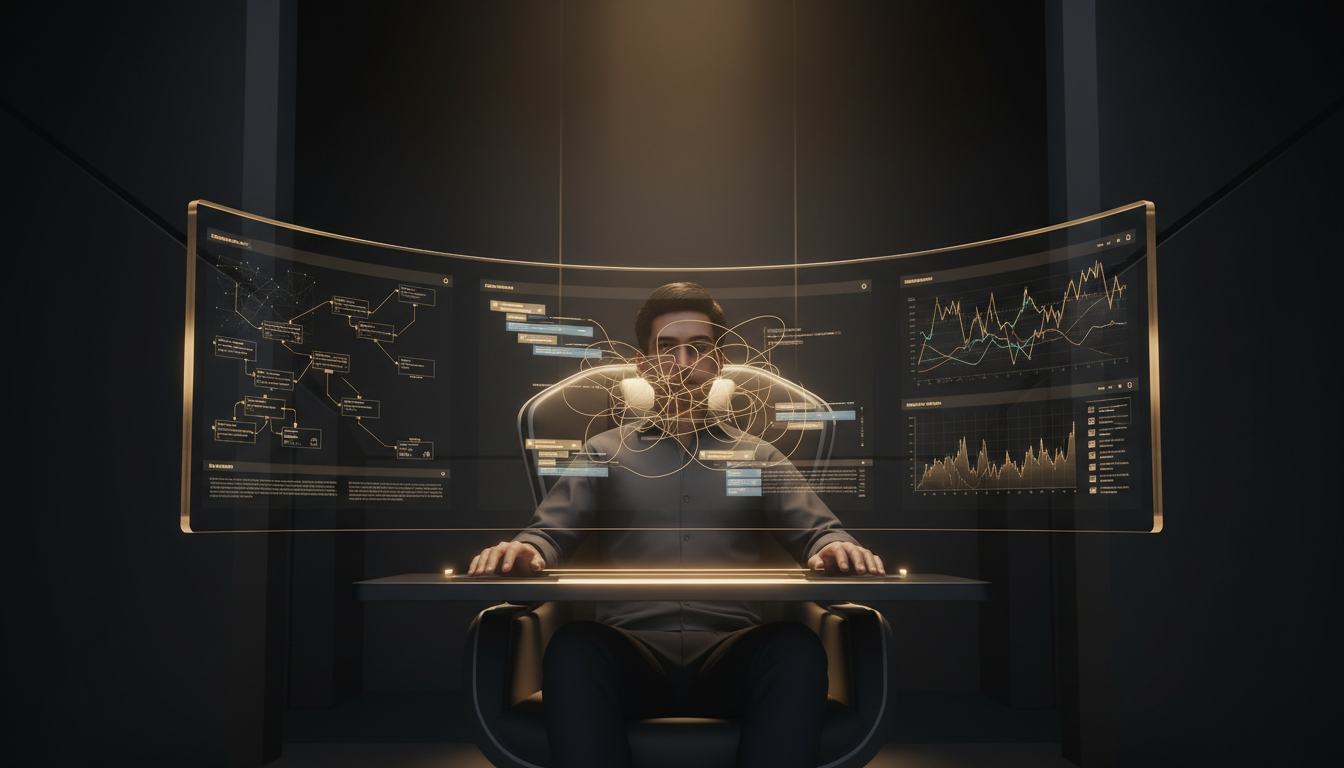
In the spring of 2026, a new trend emerged in the tech community: programmers with 15 years of experience are mass-exiting manual coding to build content factories. These are fully automated media generation systems that scrape news, write scripts, create images and videos, and publish content—almost entirely without human intervention. We explore why experienced developers are choosing this path and how these factories actually work.
Why developers are moving away from traditional coding
Career consultants note that they are increasingly seeing programmers who have spent a decade and a half in corporate development—and they are exhausted. Fifteen years of rewriting legacy monoliths, endless calls with Scrum Masters, and bureaucracy burn out even the most resilient. A profession once associated with creativity and solving complex problems has turned into a routine.
But the main change is technological. Tools like Cursor AI and GitHub Copilot have led to the rise of so-called "vibecoding." This is a process where a person describes business logic in plain text, and the neural network generates the architecture, components, and connections itself. Developers have evolved from code laborers into managers of complex AI systems. And many have asked themselves: why work for a corporation if you can monetize your technical mindset directly?
What is a content factory and how is it built
A content factory is a fully automated business process for media generation. It is often built on visual builders like n8n or Make, tightly integrated with large language models and Supabase-based databases. Such factories continuously scrape global news, write well-developed scripts, generate images, edit basic videos, and then autonomously publish materials to YouTube, blogs, and Telegram channels.
Direct human involvement here is minimal. The programmer acts as the system architect: configuring logic, connecting modules, and controlling output quality. But the content production process itself runs autonomously, 24/7, without the need to hire a team of writers, designers, or editors.
An important point: many skeptics claim that automatic generation only produces synthetic garbage. Yes, if you use blunt prompts, the internet does indeed get flooded with template-based SEO junk. But experienced technical specialists build autonomous multi-agent systems. Inside their factories, agents have specific roles:
- one scrapes trends and finds relevant topics;
- the second writes a draft of the text or script;
- the third acts as a harsh critic and checks the logic;
- the fourth works as a fact-checker and verifies data accuracy.
These agents communicate with each other in hidden logs, delivering a polished digital product to the owner. The quality of such content is significantly higher than simple single-pass generation.
Cursor SDK turns a coding agent into a library
On April 29, 2026, Cursor launched the public beta of its TypeScript SDK—a library that wraps the same runtime, harness, and models that power the desktop editor. The idea is simple: the agent that was hidden inside the Cursor interface has now become a programmable component that can be called from your own services.
This is the same shift that Anthropic and OpenAI SDKs went through years ago, but now for an agent specializing in code. Developers now have the ability to embed a coding agent into their automated systems. For example, a content factory can now not only generate text and images but also write scripts for new features, fix bugs in its own code, and adapt logic to changes in external service APIs.
The SDK supports sub-agents, hooks for controlling dangerous operations, and integration with the Model Context Protocol for connecting external data. Pricing follows a standard token model, making experimentation accessible. This is another step toward enabling programmers to build autonomous systems without having to manually write every line of code.
New models are fueling the trend
In parallel with the tools, the models themselves are evolving. In May 2026, OpenAI released GPT-5.5—the first model trained from scratch after GPT-4.5. On the Terminal-Bench 2.0 test, which simulates terminal work on real-world tasks, it scored 82.7%—a current record among public models. Cursor released Composer 2.5, which matches the performance of Claude Opus 4.7 but costs ten times less—about a dollar per task versus seven.
These models are better at handling long tasks, follow complex instructions more accurately, and are more pleasant to work with. They can plan the solution path, run verification loops, and fix their own errors. For content factories, this means that automation is becoming not only cheaper but also smarter. Systems are beginning to adapt to changes, improve their own logic, and optimize processes autonomously.
What this means for programmers
The trend shows that a programmer's technical mindset is valuable beyond corporate development. The ability to design a system, break a task into modules, and configure component interaction is all applicable to automating media businesses. Developers now have the opportunity to monetize their skills directly, without hiring a team and without dependence on an employer.
Content factories are not the only option. The same logic works for automating e-commerce, data analytics, and personalized services. The main change: the programmer stops being an executor of someone else's tasks and becomes an architect of their own autonomous systems. The tools for this already exist, models are becoming more accessible and smarter, and the barrier to entry is lowering.
If you are a programmer and feel burned out by corporate routine, perhaps it is time to look into automating your own projects. Technologies already allow you to build systems that work with almost no input from you. And if you are just starting your journey with AI tools, try modern models for coding and content generation at GEMERA AI. Access GPT-5.5, Claude Opus 4.7, Cursor Composer, and other models via our Telegram bot or web dashboard. Start with simple experiments and see how technology is changing not just the profession, but the very approach to work.