Recraft Launches Design Agent to Build Brand Kits from a Single Prompt
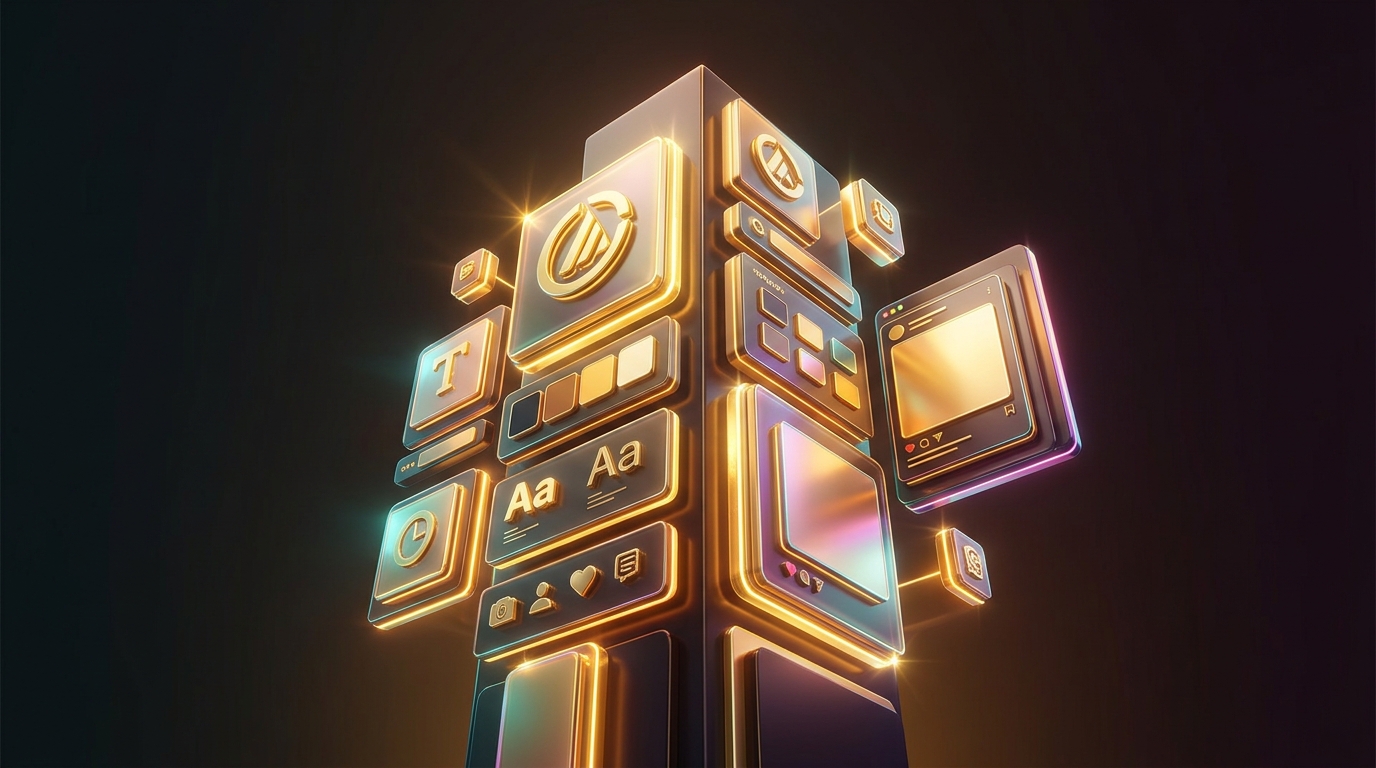
A familiar scene: the logo was ordered from one place, the icons were drawn by another, and the social media banner was made by a third freelancer. As a result, everything looks like the brand was assembled from different construction sets—because that is exactly what happened. This is the problem that Recraft's new feature solves, and it opens up an unexpectedly practical niche for those who charge for design services for small businesses.
What exactly has Recraft come up with?
Recraft —one of the brands whose image and vector graphics generation models are used in services like GEMERA AI—has rolled out an agent that builds an entire brand identity in one go. The user describes the product, the agent offers four creative directions to choose from, and after one is selected, it assembles a complete set of about 12 assets: a logo, palette, typography, app icon, icons, landing page visual or hero image, social media post, merch, and more.
The most interesting part is not the generation itself, but what happens afterward. When the set is ready, the agent saves it as a reusable Design Kit: you can open a new chat, ask for another social media post, and the agent will assemble it exactly according to the existing style. This means the brand does not fall apart into mismatched pieces after six months—the kit expands as the product grows, and a logo made in January remains the foundation for everything released in June.
For now, the feature has a specific focus: the agent works with styles and tasks in general, but this first release is tailored specifically for software—apps, websites, and similar digital products.
Where is the money for the freelancer?
If you strip away the technical wrapper, you are left with a ready-made service scenario that is easy to sell to a small online store owner, a startup, or a course creator:
- Starter Brand Package. Instead of a one-off "I'll draw a logo," you can offer the client a complete set: a logo, palette, font pair, icon set, and a social media post template—everything a business actually needs to launch, rather than just one image in a vacuum.
- Subscription-based support. Since the kit is saved and expandable, there is a logical reason for regular work: a new seasonal post, a new icon for an app feature, a sale banner—all in the already approved style, without having to rebuild the brand from scratch every time.
- Quick pitch for the client. Four directions to choose from is a ready-made presentation tool: instead of one sketch, you show the client options and discuss the direction concretely rather than abstractly.
This scheme is particularly well-suited for the audience that Recraft itself identifies as its target: this narrowing is intentional for those who need a cohesive look quickly and do not have time to wait for five different tools to coordinate with each other—that is, founders of small projects without an in-house designer.
What to pay attention to before selling to a client
Automatic assembly is a high-quality draft, not a final turnkey file. A few points are worth keeping in mind:
- Nothing is final by default. You can add details or ask for more directions at any time—nothing is set in stone until you say so, which means editing and manual refinement are not bugs, but a standard part of the process.
- Check for uniqueness. Any generated logo should be manually checked for similarities with other brands—this is the responsibility of the professional, not the neural network.
- Not equally good for every niche. The focus on digital products means that for print materials, packaging, or complex multi-page brand books, the result may require more manual refinement.
- A clear brief solves half the problem. The more specifically the product and audience are described, the less chance there is of getting a generic, "nothing" style that you will later have to save manually.
In short
The point is not that the neural network can now draw logos—it could do that before. The point is that a brand kit stops being a collection of random files and becomes a system that can be expanded for months. For a freelancer, this is a way to sell not just a one-off image, but a clear package that a small business is willing to pay for regularly.
If you want to try assembling a similar package of assets for your own or a client's project, check out the GEMERA AI model and tool catalog—you can test image generation there and find a workflow for your specific task.